Civil War
HASKIN, JOHN BUSSING (1821-95) U.S. Representative – New York – 1857-61
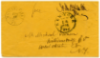
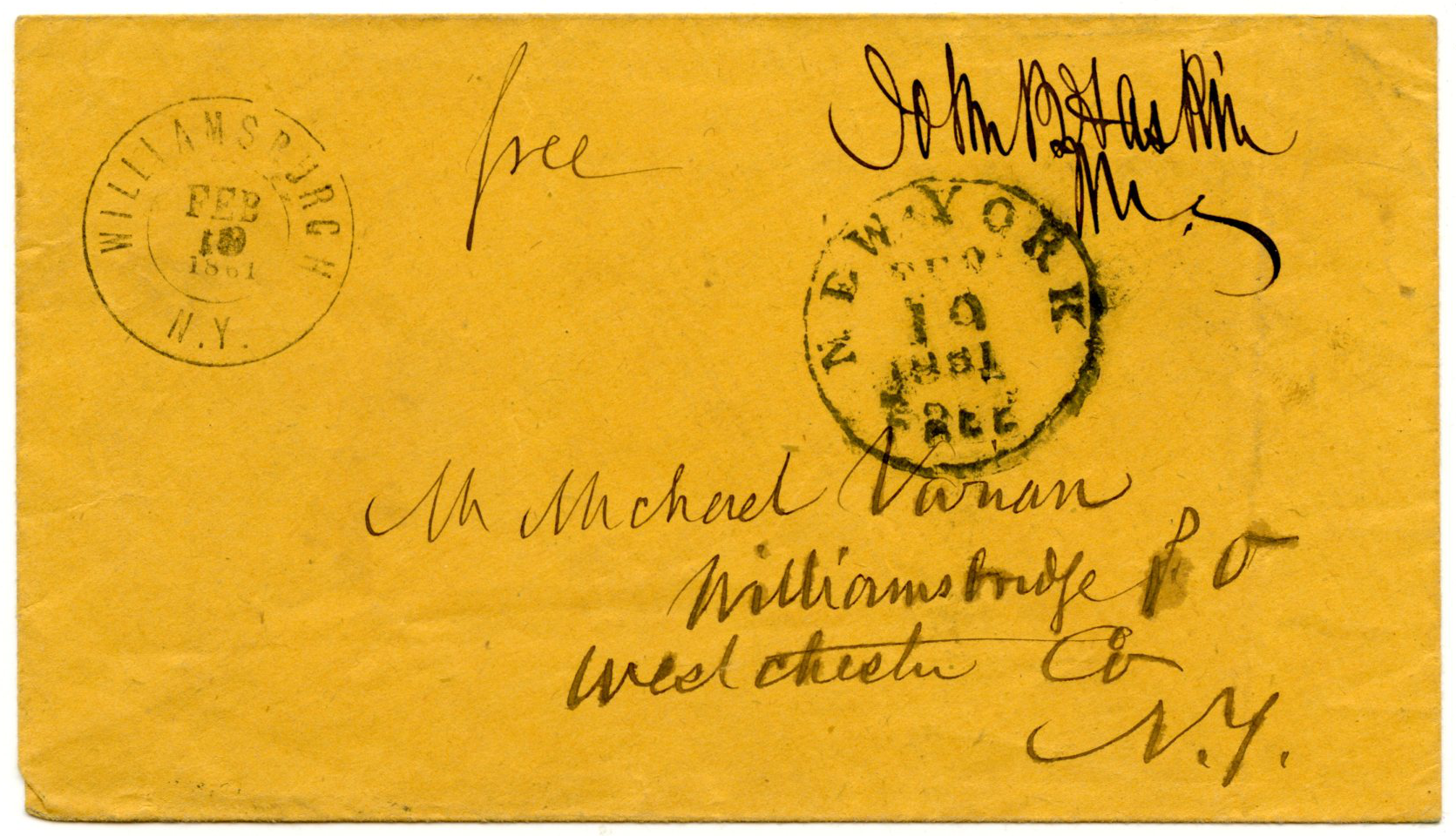
Franked Envelope as Civil War Congressman
Franked Envelope, 3” x 5 ½”, “John B. Haskin, M[ember] C[ongress],” with stamped free designation and February 19, 1861 New York City and Williamsburgh, New York postmarks; addressed in another hand to a Westchester County, New York resident.
Smearing of ink in the New York postmark and in portions of the address; heavier soiling and wear at the edges.
HAYS, WILLIAM (1819-75) Union Brigadier General; Veteran of the Mexican & Seminole Wars
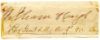
Civil War-Date Signature
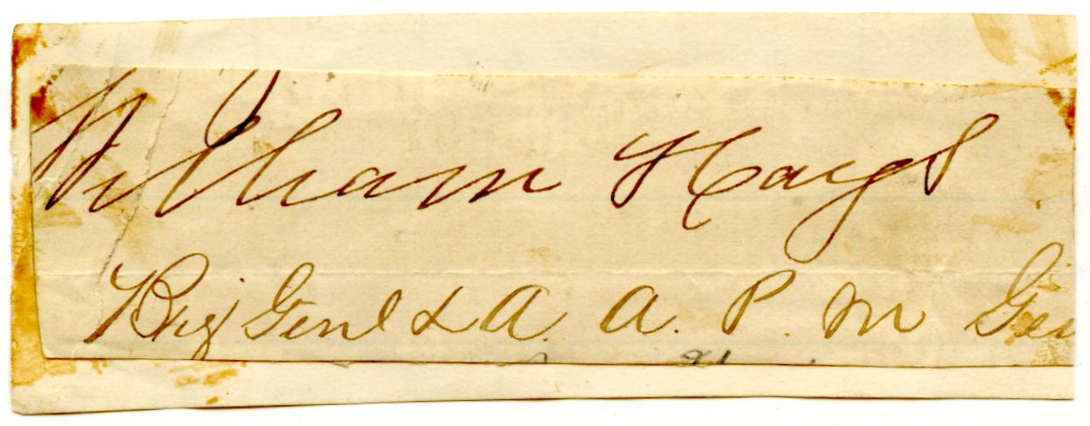
Signature, with rank in another hand, “William Hays, Brig[adier] Gen[era]l & A[ssistant] P[rovost] M[arshal] Gen[eral],” on a 1” x 3 ½” slip of paper, removed from a larger letter; affixed to larger backing.
General staining and wear throughout; there is a diagonal tear, with no loss of paper, through a portion of the signature.
HAZEN, WILLIAM BABCOCK (1830-87) Union Major General; Early-war Colonel of the 41st Ohio Infantry; Chief Signal Officer in the U.S. Army – 1880-87; Veteran of the Indian Wars
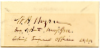
Signed Card, 1 ¾” x 3 ¾”, bevel-edged, “W.B. Hazen, Br[i]g[adier] & B[re]v[e]t Maj[or] Gen[era]l, Chief Signal Officer U.S.A.”
Rectangular area of uneven toning from past framing surrounds the signature, along with general wear and soiling throughout; surface abrasion at the lower right; old mounting traces on the reverse.
HILL, AMBROSE POWELL (1825-65) Confederate Lieutenant General; Early-war Colonel of the 13th Virginia Infantry; Killed-in-Action during the Battle of Petersburg, Virginia – April 2, 1865; Veteran of the Mexican and Seminole Wars
-100.png)
-100.png)
Civil War-Date Endorsement Signed – Just six weeks before Hill’s death at the Battle of Petersburg
War-Date Endorsement Signed, on a 3 ¾” x 7” portion from the reverse of a medical furlough document. Signed beneath by an adjutant, and on the reverse by two surgeons and 47th North Carolina Infantry Sergeant Joseph Young Moss.
“H[ea]d Q[uarte]rs 3rd Army Corps, Feb[ruar]y 17, 1865. Res[pectfully] forwarded approved, A.P. Hill, Lieutenant Gen[era]l.”
A.P Hill was killed-in-action at the Battle of Petersburg, Virginia just six weeks after the signing of this endorsement. Modern records indicate that Sergeant Moss was wounded and captured during the Battle of Gettysburg, later exchanged, and was again captured on the day of Hill’s death at Sutherland’s Station, Virginia.
On the medium-brown paper often used by the Confederates, thus a bit lacking in contrast, with the expected light fold creases.
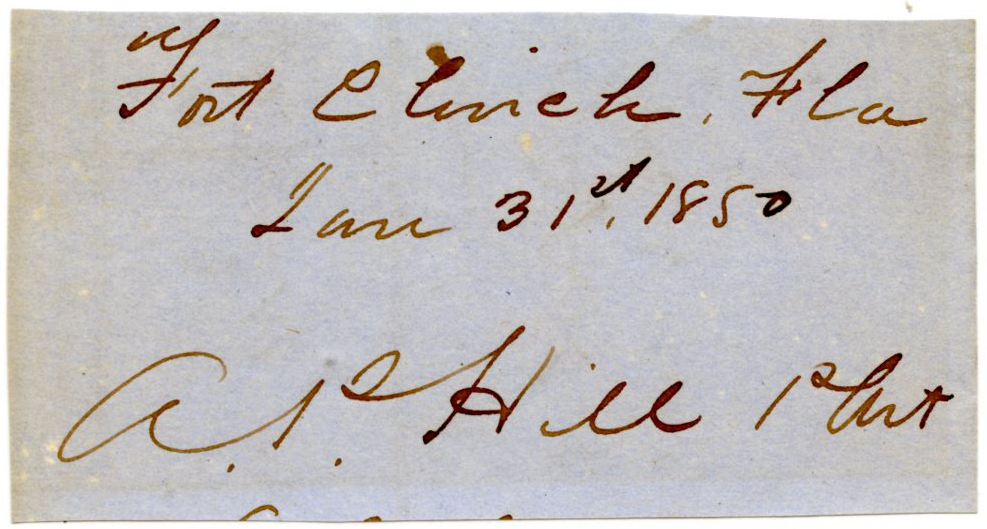
HILL, AMBROSE POWELL (1825-65) Confederate Lieutenant General; Early-war Colonel of the 13th Virginia Infantry; Killed-in-Action during the Battle of Petersburg, Virginia – April 2, 1865; Veteran of the Mexican and Seminole Wars
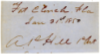
Signature, with place and date also in Hill’s hand, “Fort Clinch, Fl[orid]a, Jan[uary] 31st 1850, A.P. Hill, 1st Art[illery],” on a 1 ¾” x 3 ¼” portion of a military document.
A large, bold example, in stark contrast to the smaller and lighter signings from many of Hill’s Civil War-time documents and letters.
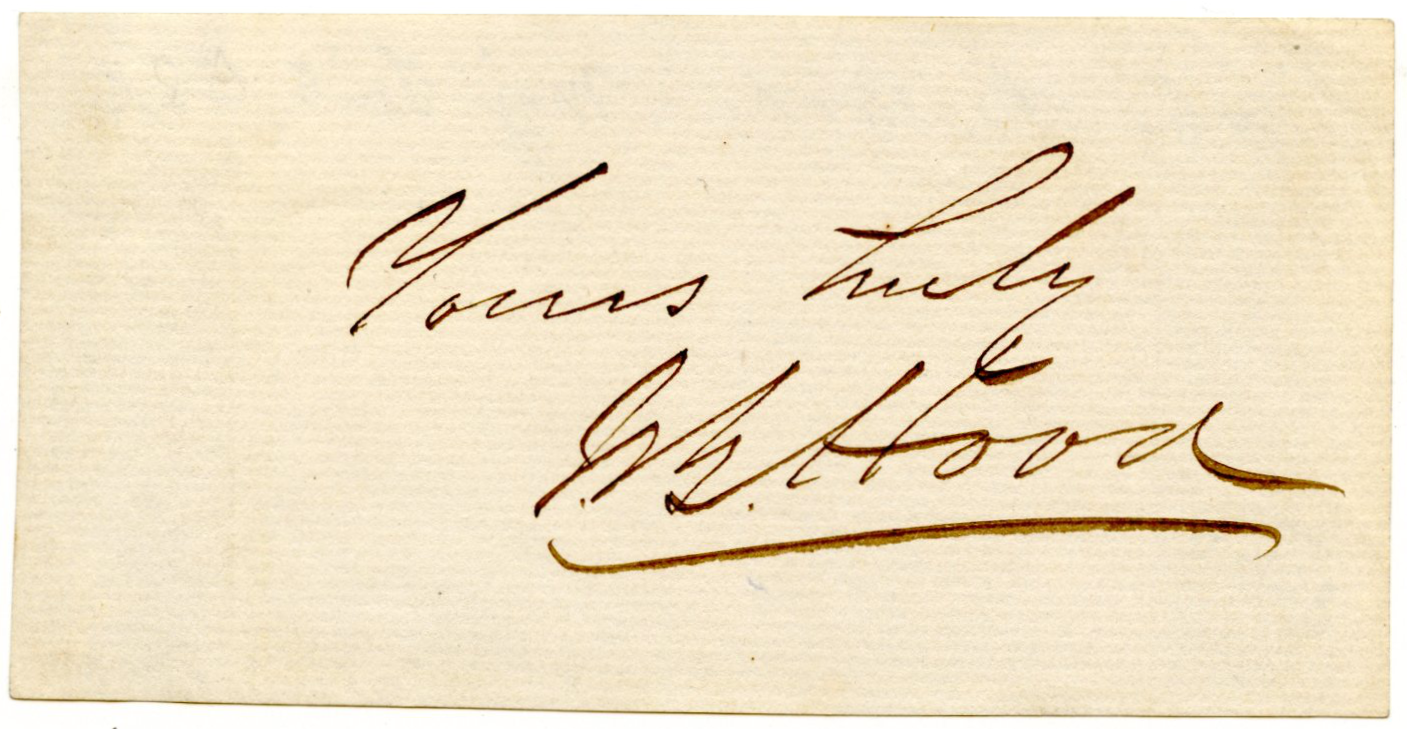
HOOD, JOHN BELL (1831-79) Confederate General; Early-war Colonel of the 4th Texas Infantry
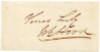
Signature, with sentiment, “Yours Truly, J.B. Hood,” on a 2 ¼” x 4 ½” slip of paper.
A large, exceptional example.
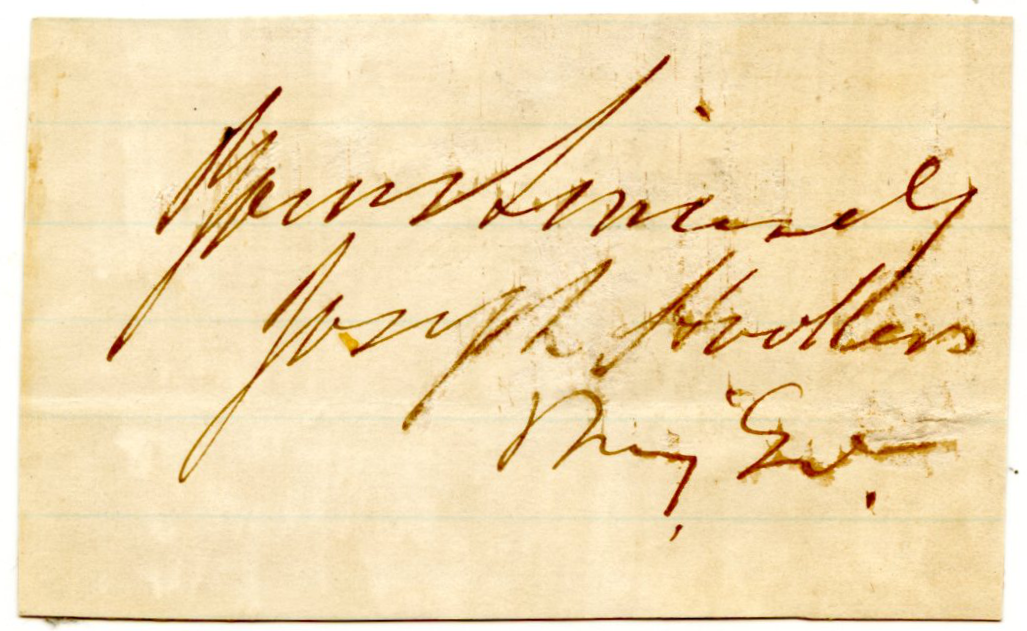
HOOKER, JOSEPH (1814-79) Union Major General; Led the Union Army of the Potomac at the Battle of Chancellorsville, Virginia; Veteran of the Mexican & Seminole Wars
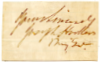
Civil War-Date Signature & Rank
Signature, with sentiment and early-war rank, “Yours Sincerely, Joseph Hooker, Brig[adier] Gen[era]l,” on a 2” x 3 ¼” slip of lined paper, affixed to heavier backing of the same dimension.
Lightly and evenly toned, with minor wear and staining; portions affected by brushing and bleeding of ink, along with surface abrasion.
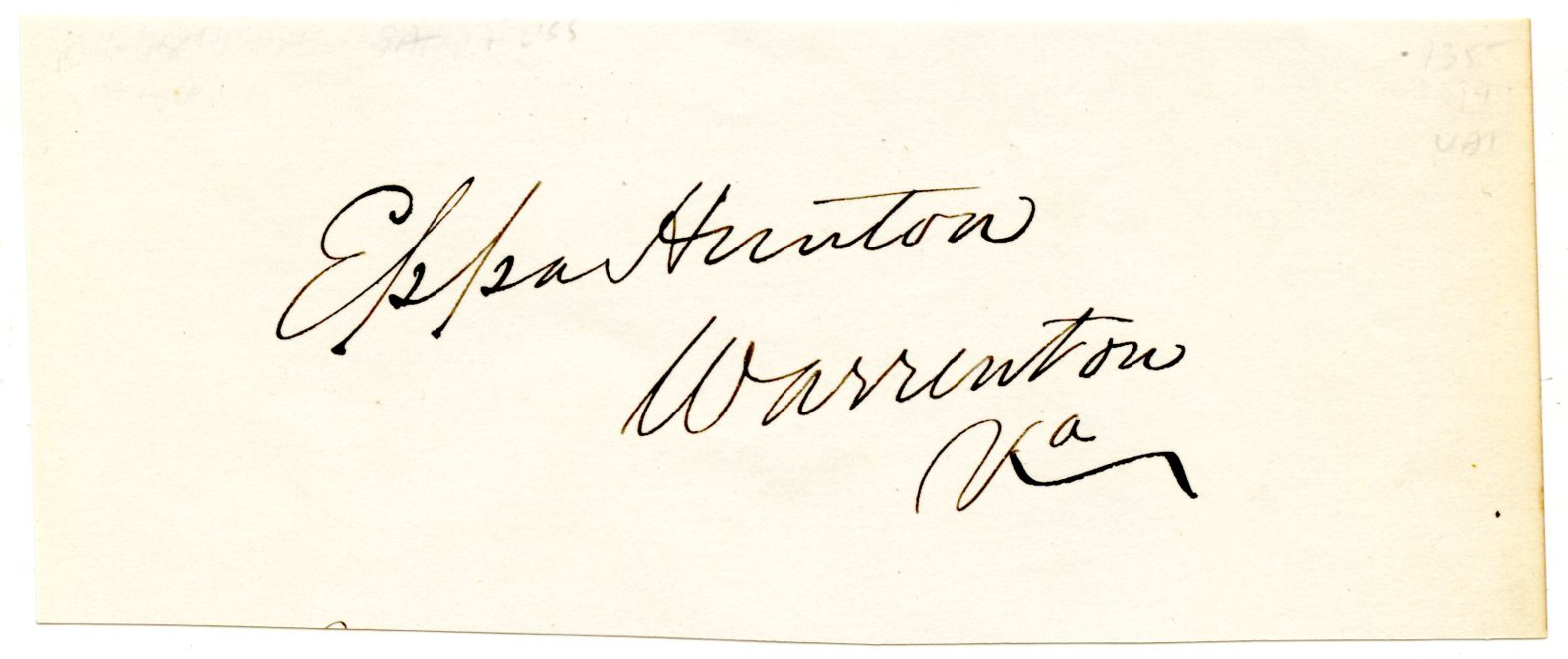
HUNTON, EPPA (1822-1908) Confederate Brigadier General; U.S. Senator – Virginia – 1892-95; U.S. Representative – Virginia – 1873-81
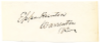
Signature, as U.S. Congressman, “Eppa Hunton, Warrenton, V[irgini]a,” on a 2” x 5” portion of an album page.
Excellent.
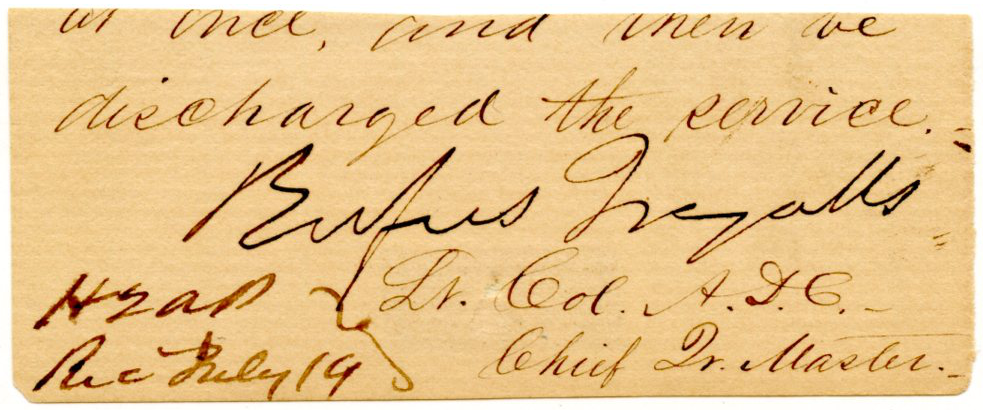
INGALLS, RUFUS (1818-93) Union Brigadier General; Brigadier & Quartermaster General of the U.S. Army – 1882-83; Veteran of the Mexican War

Signature, “Rufus Ingalls,” with rank in another hand, on a 1 ¼” x 3 ¼” slip of paper, removed from a military letter.
Lightly and evenly toned, with a few small stains; an old mounting hinge is on the reverse.
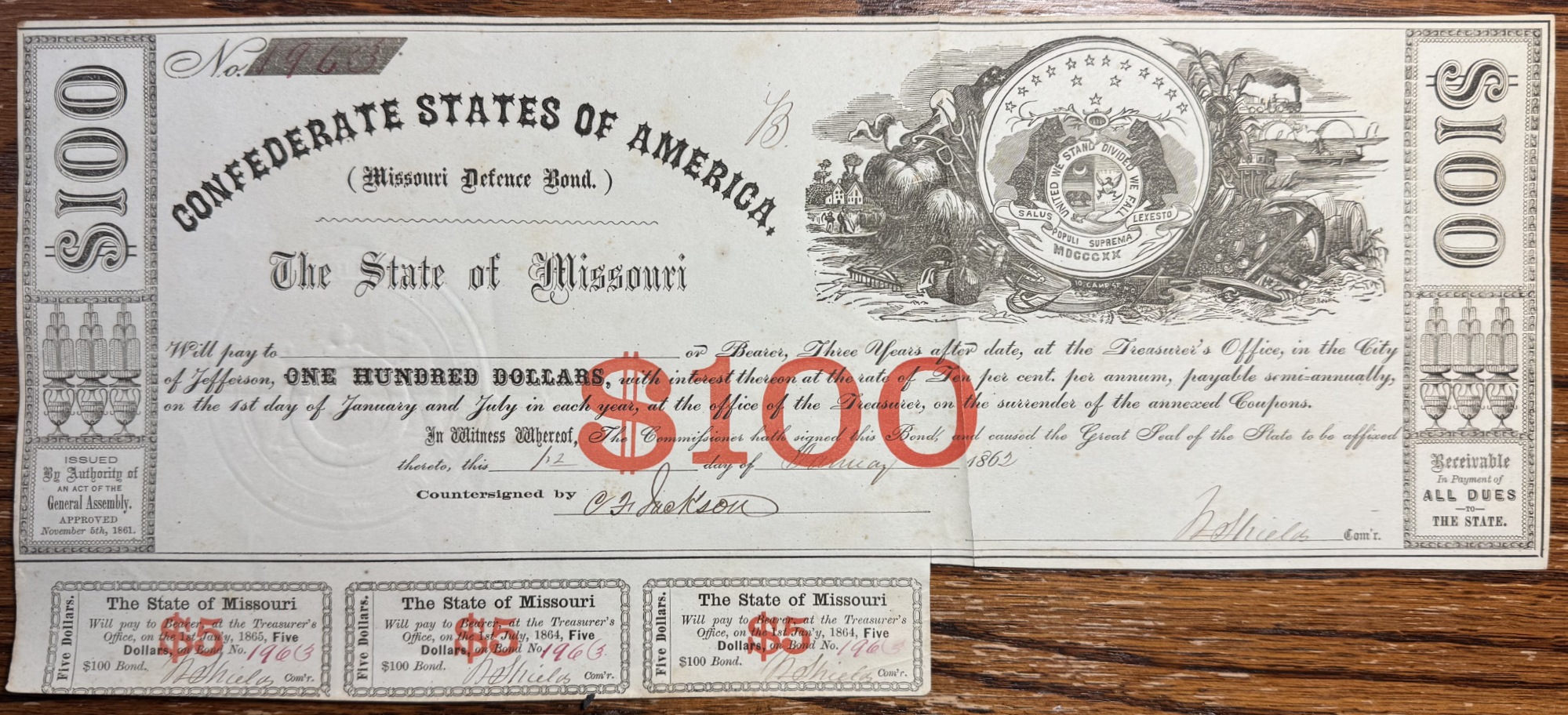
JACKSON, CLAIBORNE FOX (1806-62) Governor of Missouri – 1861; Confederate Governor in exile, planning the secession of the State of Missouri – 1861-62; Missouri State Congressman – 1836-52
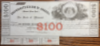
Civil War-Date Document Signed
Document Signed, 5 ¾” x 13”, January 1, 1862, Jefferson City, Missouri, “C.F. Jackson,” as Confederate Governor in exile, a $100 “Missouri Defence Bond,” with a lightly embossed seal at left. The payee is unnamed, despite only three of the coupons attached at the lower edge being still present.
Lightly and evenly toned, with minor, clean separation at the edges of a vertical fold at mid-right.
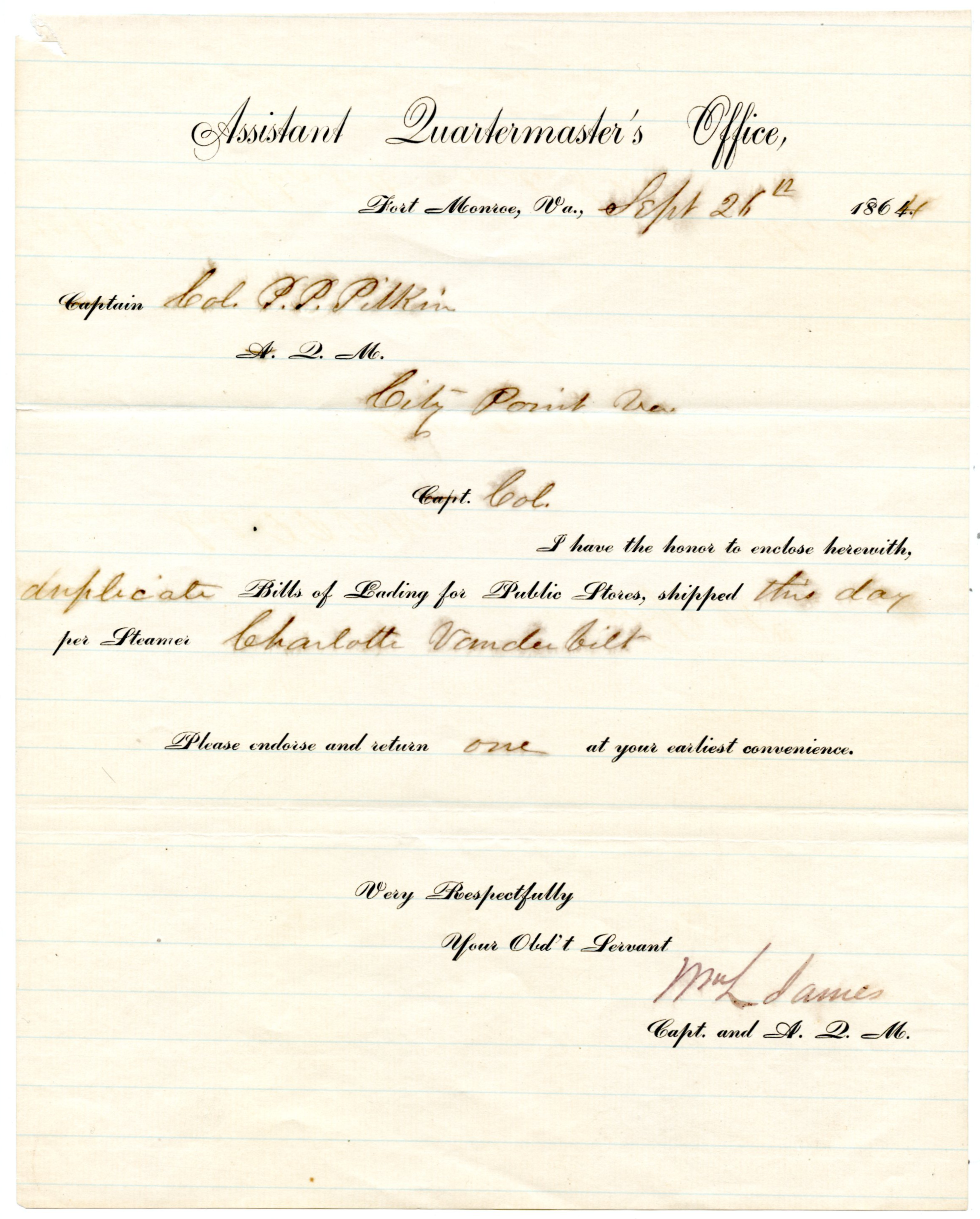
JAMES, WILLIAM LEVIS (1833-1903) Union Brevet Brigadier General; Civil War Colonel in the Quartermaster’s Department
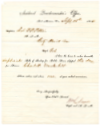
War-Date Letter Signed – City Point, Virginia, September 1864 – Bills of Lading for the “Steamer Charlotte Vanderbilt.”
Civil War-Date Letter Signed, on an imprinted 7 ½” x 9 ½” form. Partly printed, with the manuscript portions also being accomplished by James.
“Assistant Quartermaster’s Office, Fort Monroe, V[irgini]a, Sept[ember] 26th 1864. Captain Col[onel] P.P. Pilkin, A[ssistant] Q[uarter] M[aster] City Point, Va. Col[onel], I have the honor to enclose herewith, duplicate Bills of Lading for Public Stores, shipped this day per Steamer Charlotte Vanderbilt. Please endorse and return one at your earliest convenience. Very respectfully Your Ob[e]d[ien]t Servant, Wm. L. James, Capt[ain] and A[ssistant] Q[uarter] M[aster].”
Lightly and evenly toned, with two horizontal folds; there is a small tear, with minor paper loss, in the upper left corner.
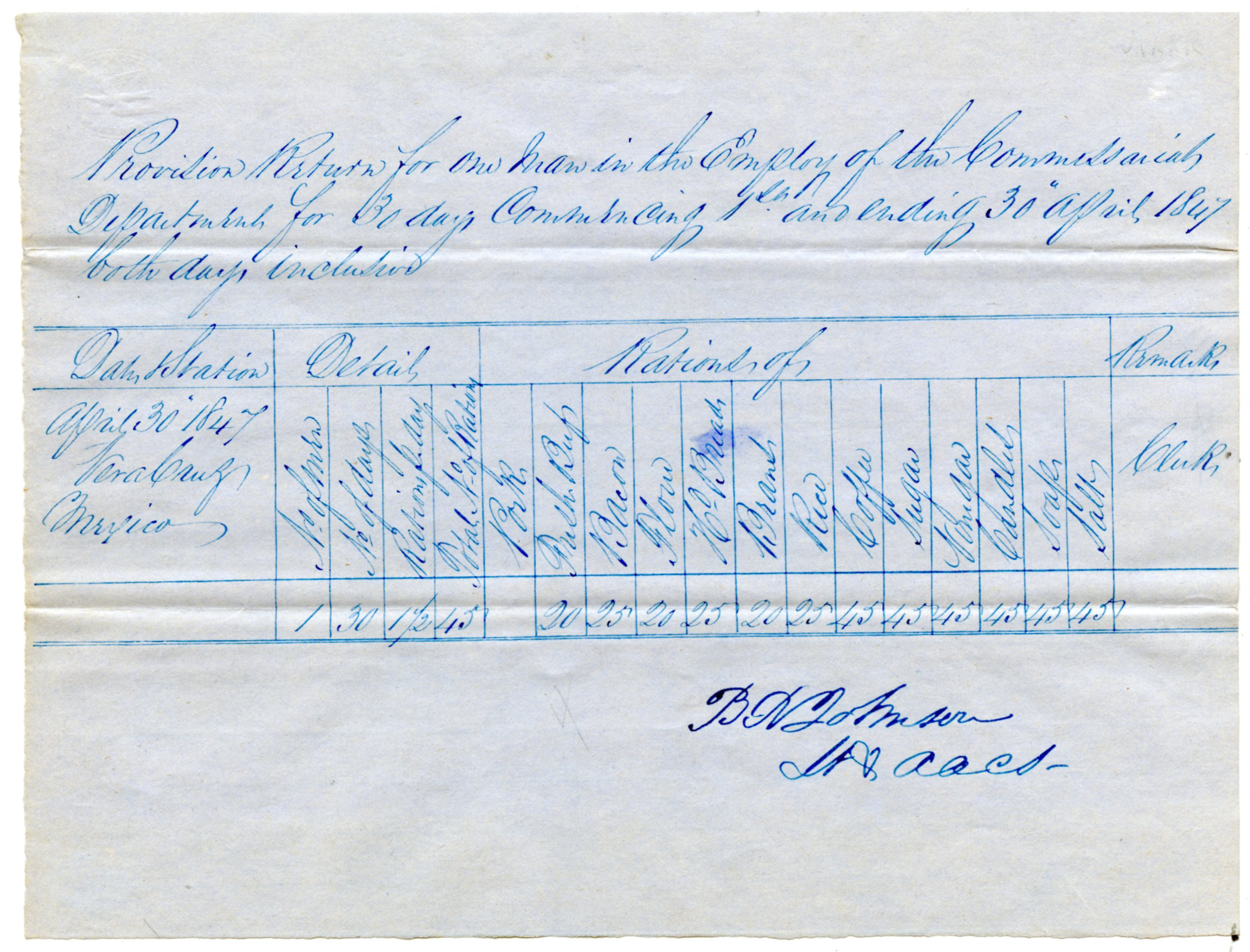
 JOHNSON, BUSHROD RUST (1817-80) Confederate Brigadier General; Saw action at the Civil War battles of Fort Donelson, Shiloh, Stone’s River, Chickamauga, and Petersburg; Veteran of the Mexican War
Mexican War-Date Document Signed
Document Signed, 6” x 8”, “April 30, 1847, Vera Cruz, Mexico, B.R. Johnson, L[ieutenan]t & A[ssissant] A[djutant] C[ommissary],” a provision return for one soldier for the month of April 1847.
Very good condition overall, with two horizontal folds.
JOHNSTON, JOSEPH EGGLESTON (1807-91) Confederate General; Veteran of the Mexican & Seminole Wars; U.S. Representative – Virginia – 1879-81
Signed Gilt-Edged Card, 1 ¼” x 3 ½”, “J.E. Johnston.” Affixed to a 4” x 6 ¾” album page, with the violet-ink notation, “January/[18]82” in another hand at lower left. An unrelated clipping in an unidentified hand and from a larger document or letter is affixed at lower right.
Excellent.
KEARNY, PHILIP, JR. (1815-62) Union Major General; Killed-in-Action at the Battle of Chantilly, Virginia – September 1, 1862; Veteran of the Mexican War

Mexican War-Date Signature & Rank
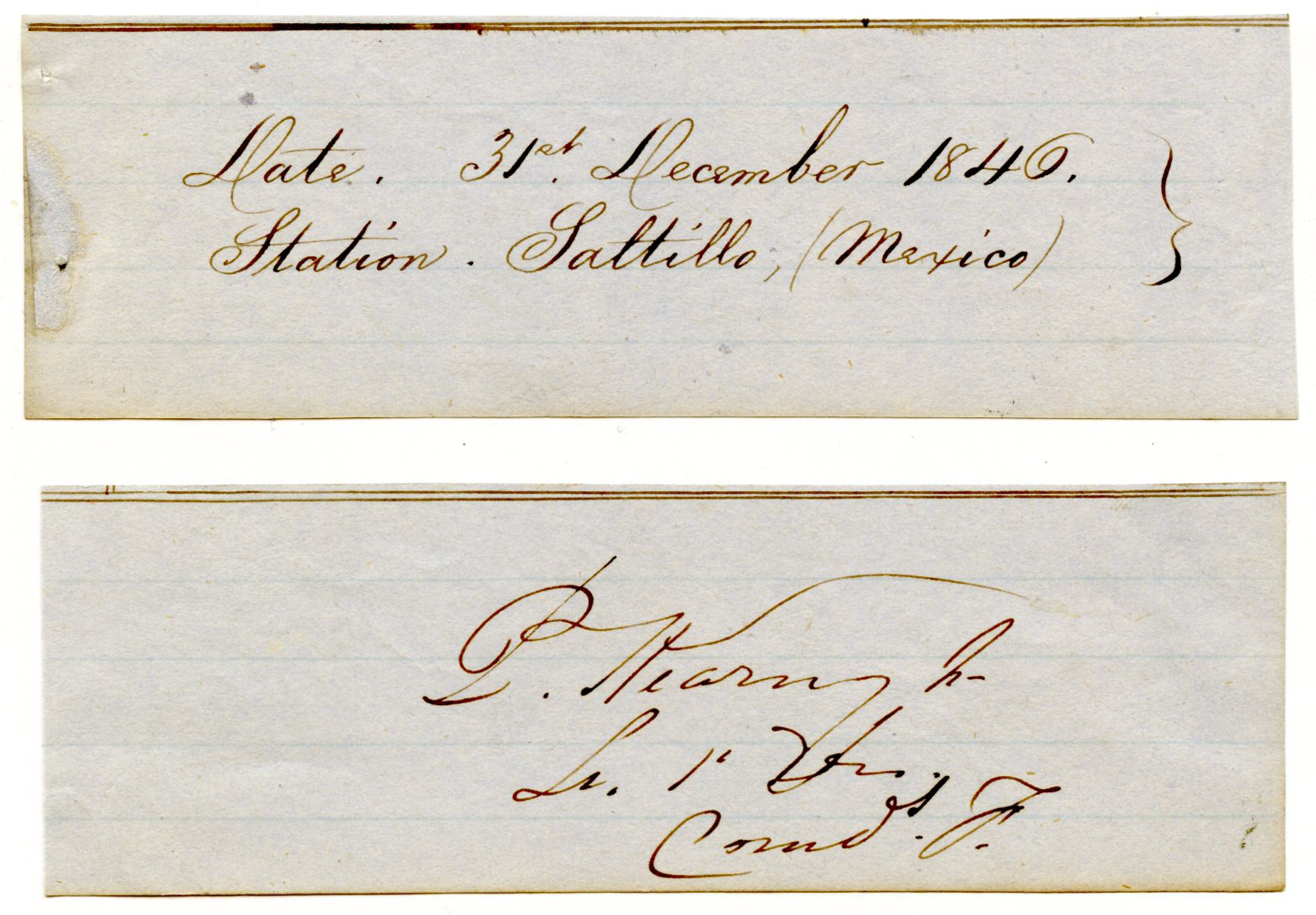
Signature & Rank, “P. Kearny, Jr., L[ieutenan]t 1st Dr[agoon]s Com[man]d[ing]…” on a 1 ½” x 5” slip of paper; a portion of the document from which Kearny’s signature was removed is included, and bears the manuscript heading, in an unknown hand, “Date. 31st December 1846. Station. Saltillo, (Mexico).”
Minor wear and staining, with two pinholes at the left edge of the dated slip of paper.
KEMPER, JAMES LAWSON (1823-95) Confederate Major General; Severely wounded in Pickett’s Charge at Gettysburg – July 3, 1863; Governor of Virginia – 1874-78; Veteran of the Mexican War
Document Signed, Richmond, Virginia, February 6, 1886, “J.L. Kemper,” a partly printed 2 ½” x 8” check, also accomplished by Kemper, payable to “Cha[rle]s J. Kemper,” thus incorporating a second partial signature; drawn on The State Bank of Virginia for one hundred dollars. The reverse is endorsed by Charles J. Kemper.
Very good overall, with light vertical fold creases; minimal loss of paper from barely noticeable cross-cut and punch cancellations which intersect Kemper’s signature.
LAMAR, LUCIUS QUINTUS CINCINNATUS (1825-93) U.S. Supreme Court Associate Justice – 1888-93; U.S. Interior Secretary – 1885-88; Confederate Lieutenant Colonel & Diplomat; U.S. Senator – Mississippi – 1877-85
-100.png)
-100.png)
Signature, “L.Q.C. Lamar,” with the notation “Sec[retary] of Interior” in an unknown hand, on the reverse of his engraved 1 ¾” x 3 ½” personal calling card.
Excellent, with light, even toning and a few superficial stains.
LAW, EVANDER McIVER (1836-1920) Confederate Major General – Alabama; Severely wounded at First Bull Run, subsequently served with distinction at Gettysburg and Chickamauga
-100.png)
Autograph Document Signed, 5 ¾” x 7 ¾”, Law’s handwritten requisition, rations for the officers and state troops under his command at Pensacola, Florida, many undoubtedly soon to be mustered into the 4th Alabama Infantry in the service of the Confederacy.
"Barrancas Barrack [Florida], Feb[ruary] 15, 1861… E.M. Law, Capt[ai]n, A[labama] Z[ouaves].”
Several ink stains throughout, with a pinhole at the upper edge; irregularly torn lower edge; horizontal fold at center.
LEE, FITZHUGH (1835-1905) Confederate Major General; Governor of Virginia – 1886-90; U.S. Major General of Volunteers – Spanish-American War
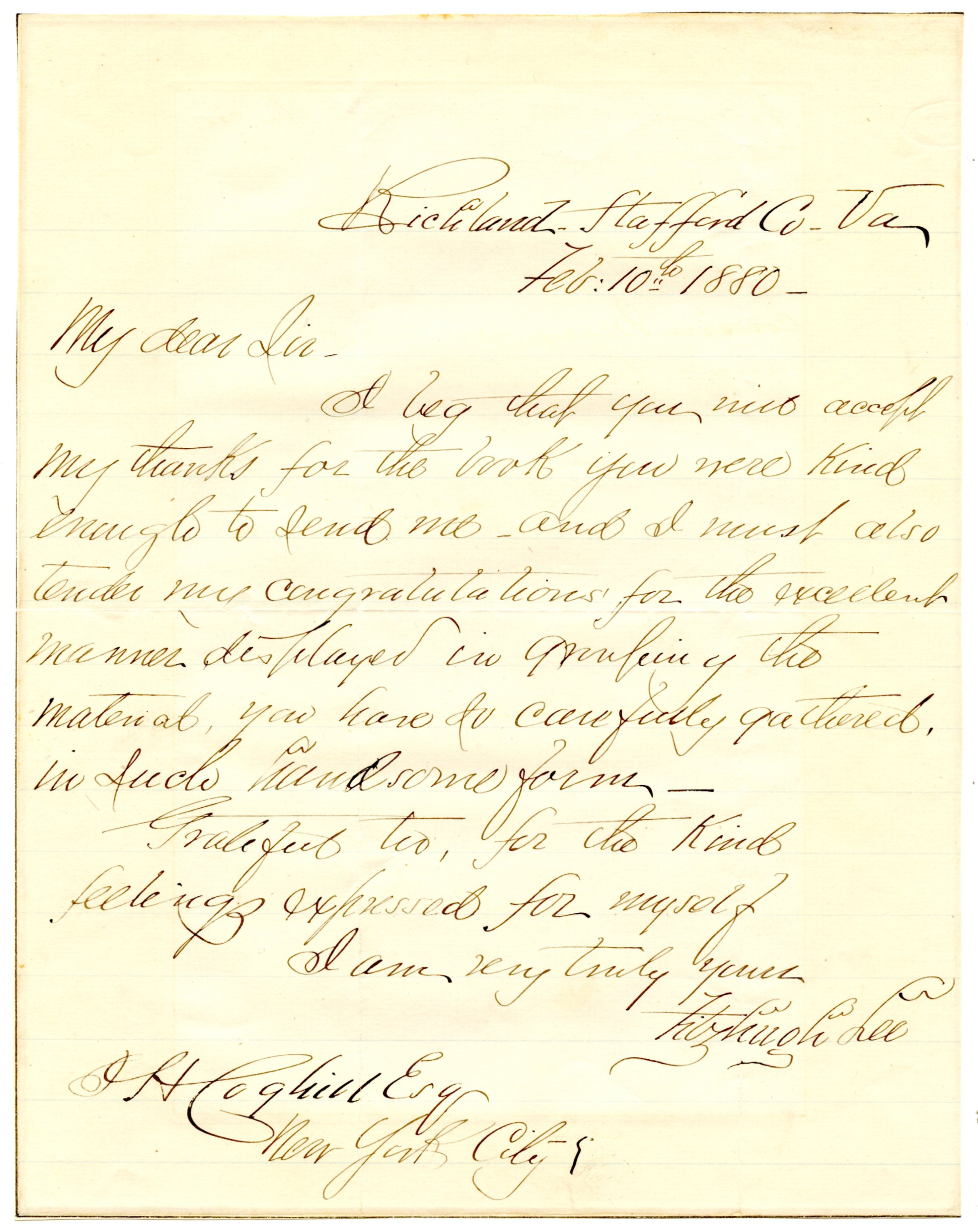
Autograph Letter Signed, 7 ¼” x 9 ¼”, thanking one “J.H. Coghill, Esq[uire], New York City,” for the gift of a book.
“Richland, Stafford Co[unty], V[irgini]a,
Feb[ruary] 10, 1880.
My dear Sir,
I beg that you will accept my thanks for the book you were kind enough to send me, and I must also tender my congratulations for the excellent manner displayed in grouping the material, you have so carefully gathered, in such handsome form.
Grateful too, for the Kind feelings expressed for myself,
I am very truly yours,
Fitzhugh Lee.”
Lightly and evenly toned, with the expected folds; tipped to slightly larger backing at the edges.
LEE, ROBERT EDWARD (1807-70) Confederate General & Commander of the Army of Northern Virginia
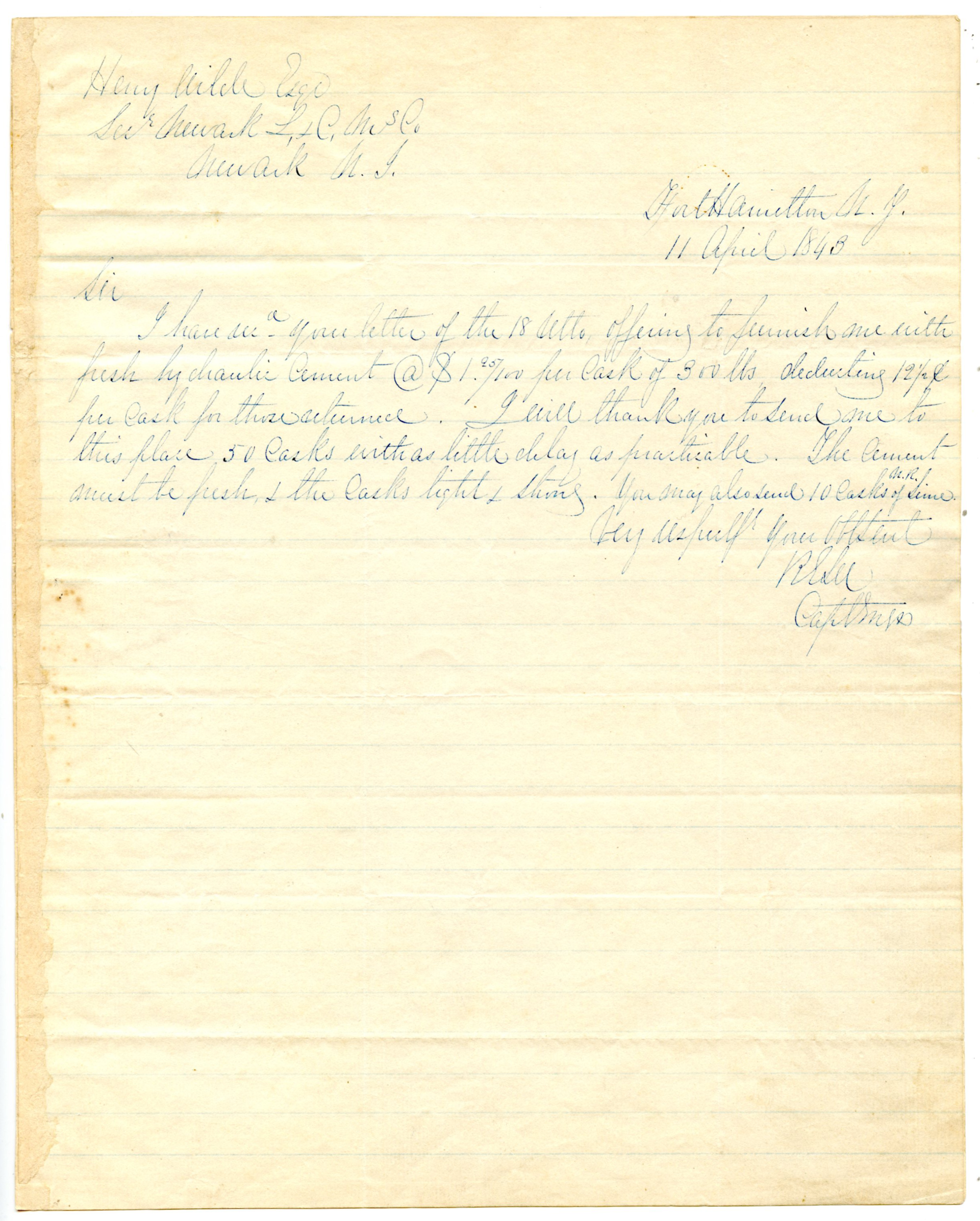
Autograph Letter Signed, 7 ¾” x 10 ¾”, one page. As Post Engineer at Fort Hamilton, situated at the mouth of New York Harbor in Brooklyn, Lee writes to a materials supplier, ordering hydraulic cement, commonly used to construct and repair stone and cement structures, even underwater. While serving as post engineer at Fort Hamilton, 1841-46, Lee is credited with the design and construction of several New York-area fortifications, notably Fort Richmond, Fort Tompkins, and the forts at Willetts Point and Sandy Hook.
“Henry Wilde, Esq[uir]e,
Sec[retar]y Newark L, & C, Ms. Co.,
Fort Hamilton, N[ew[ Y[ork],
11 April 1843.
Sir,
I have rec[eive]d your letter of the 18 Ult[im]o, offering to furnish me with fresh hydraulic Cement @ $1.25/100 per cask of 300 lbs., deducting 12 ½ c[ents] per cask for those returned. I will thank you to send me to this place 50 Casks with as little delay as practicable. The cement must be fresh, & the Casks light & strong. You may also send 10 Casks of Lime.
Very respectf[ull]y Your Ob[edien]t Serv[an]t,
R.E Lee,
Capt[ain] Eng[ineer]s.”
Lightly and evenly toned, with minor soiling and wear and the expected folds; the integral leaf, addressed in another hand, is bound by a paper strip at the left edge, and has a small hole well beneath the address from the opening of a no-longer-present wax seal.
LEE, ROBERT EDWARD (1807-70) Confederate General & Commander of the Army of Northern Virginia
As Superintendent of the U.S. Military Academy at West Point
LEE, ROBERT EDWARD (1807-70) Confederate General & Commander of the Army of Northern Virginia
GARNETT, ROBERT SELDEN (1819-61) Confederate Brigadier General; Killed-in-Action at the Battle of Corrick’s Ford, Virginia, July 13, 1861 - the first general officer to be killed during the American Civil War; Veteran of the Mexican & Seminole Wars
TOTTEN, JOSEPH GILBERT (1788-1864) Union Brigadier General during the American Civil War; Veteran of the War of 1812 & the Mexican War
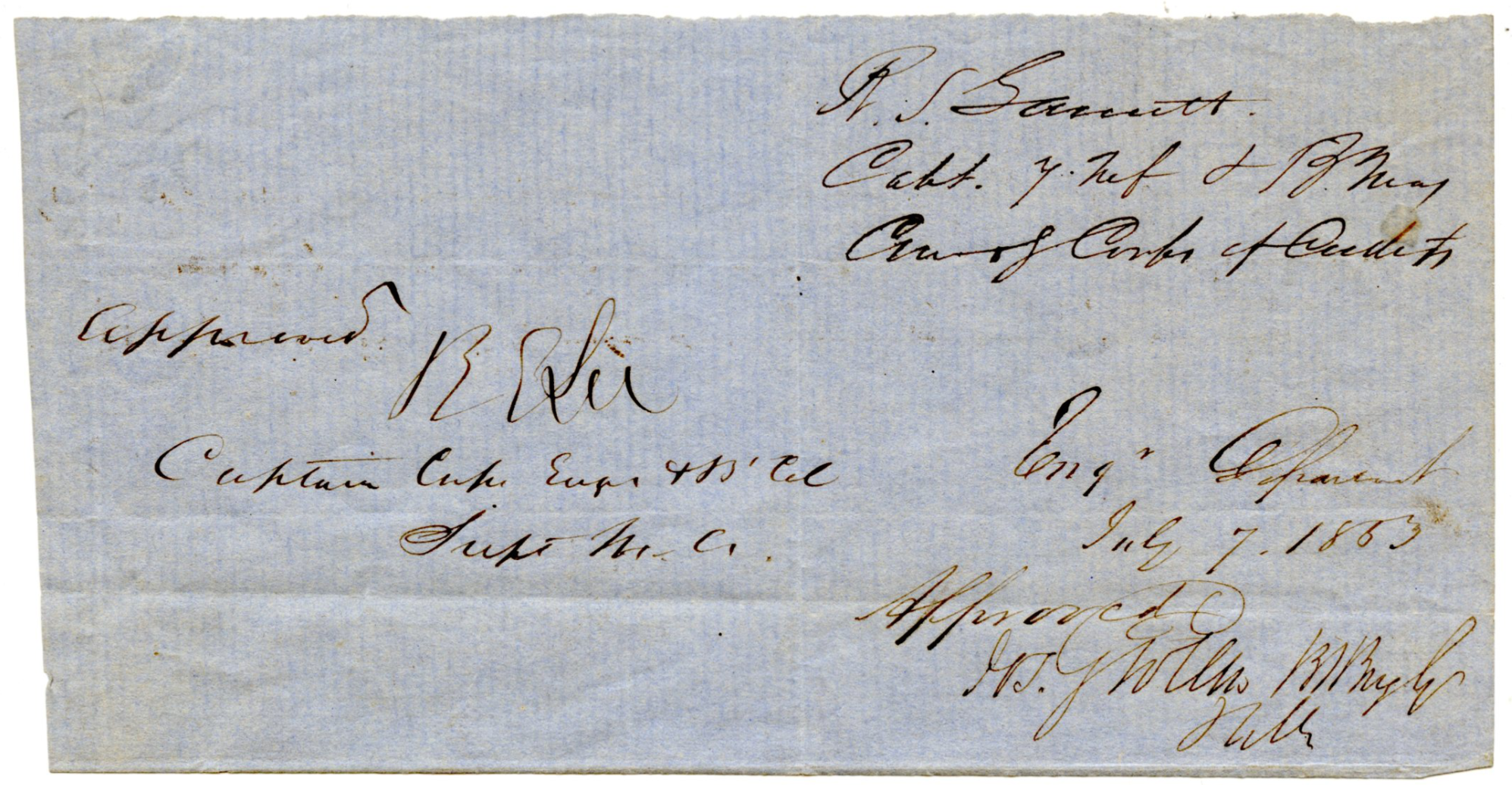
Endorsement Signed, as Superintendent of the U.S. Military Academy at West Point, “Approved, R.E. Lee, Captain Corps Eng[ineer]s & B[revet] Col[onel, Sup[erintenden]t M[ilitary] A[cademy],” on a 3 ½” x 7” portion of a letter from Robert S. Garnett, whose signature and rank are at upper right: “R.S. Garnett, Capt[ain] 7th Inf[antry] & B[revet] Maj[or], Com[mandant] of Corps of Cadets.” Also endorsed by longtime U.S. Army Officer Joseph Totten beneath, “Eng[inee]r Department, July 7, 1853. Approved, Jos. G. Totten.”
Several light creases and a few minor stains detract very little.

-1216.png)
-1232.png)


-1084.png)
-1086.png)
-1995.png)