Civil War
POWELL, WILLIAM HENRY (1822-1904) Union Brigadier General; Colonel of the 2nd West Virginia Cavalry; Awarded the Congressional Medal of Honor for action at Sinking Creek Valley, Virginia – November 26, 1862
Civil War-Date Autograph Letter Signed – from the Department of West Virginia
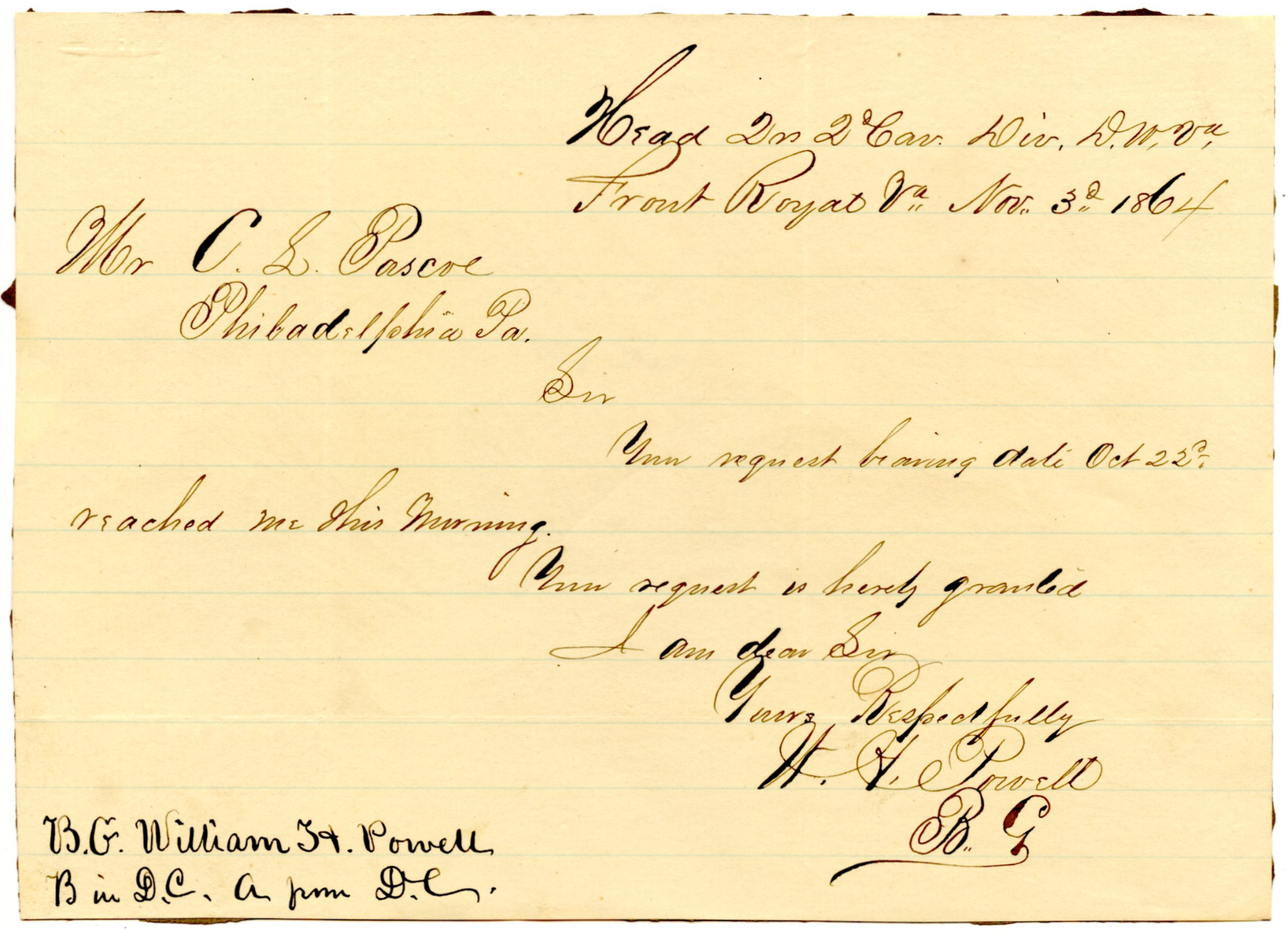
Autograph Letter Signed, 5 ½” x 7 ½”, responding to an autograph request from a noted Civil War-era collector.
“Head Q[uarte]rs 2nd Cav[alry] Div[ision] D[epartment] [of] W[est] V[irginia]. Front Royal, V[irgini]a, Nov[ember] 3rd 1864. Mr. C.L. Pascal, Philadelphia, P[ennsylvani]a. Sir, Your request bearing date Oct[ober] 22nd reached me this morning. Your request is hereby granted. I am dear Sir, Yours Respectfully, W.H. Powell, B[rigadier] G[eneral.”
Lightly and evenly toned; affixed to old heavier backing.
PRICE, STERLING (1809-67) Confederate Major General; Governor of Missouri – 1853-57; U.S. Representative – Missouri – 1845-46; Veteran of the Mexican & Missouri Mormon Wars
 9164-100.png)
 9164-100.png)
 9164-100.png)
PRICE, STERLING (1809-67) Confederate Major General; Governor of Missouri – 1853-57; U.S. Representative – Missouri – 1845-46; Veteran of the Mexican & Missouri Mormon Wars
MILLER, MADISON (1811-96) Union Brevet Brigadier General; Colonel of the 18th Missouri Union Infantry; Late-war Brigadier General in the Missouri State Militia; President of the St. Louis & Iron Mountian Railroad Company
Document Signed, 9 ¼” x 11 ¼”, Jefferson City, Missouri, October 27, 1856, “Sterling Price,” as Missouri Governor, a partly printed $1000 bond of the Saint Louis & Iron Mountain Railroad. Countersigned below by Missouri Secretary of State Benjamin Franklin Massey, along with Railroad President Madison Miller, future Brevet Brigadier General in the Union Army, on the reverse.
Significant trimming of the ornate original borders also affects the printed text on the reverse; some separation at the expected fold creases, with negligible loss of paper; all signatures are unaffected by cancellation holes and chipping at the edges.
PRICE, STERLING (1809-67) Confederate Major General; Governor of Missouri – 1853-57; U.S. Representative – Missouri – 1845-46; Veteran of the Mexican & Missouri Mormon Wars
Civil War-Date Letter Signed – preparing for the Battle of Iuka
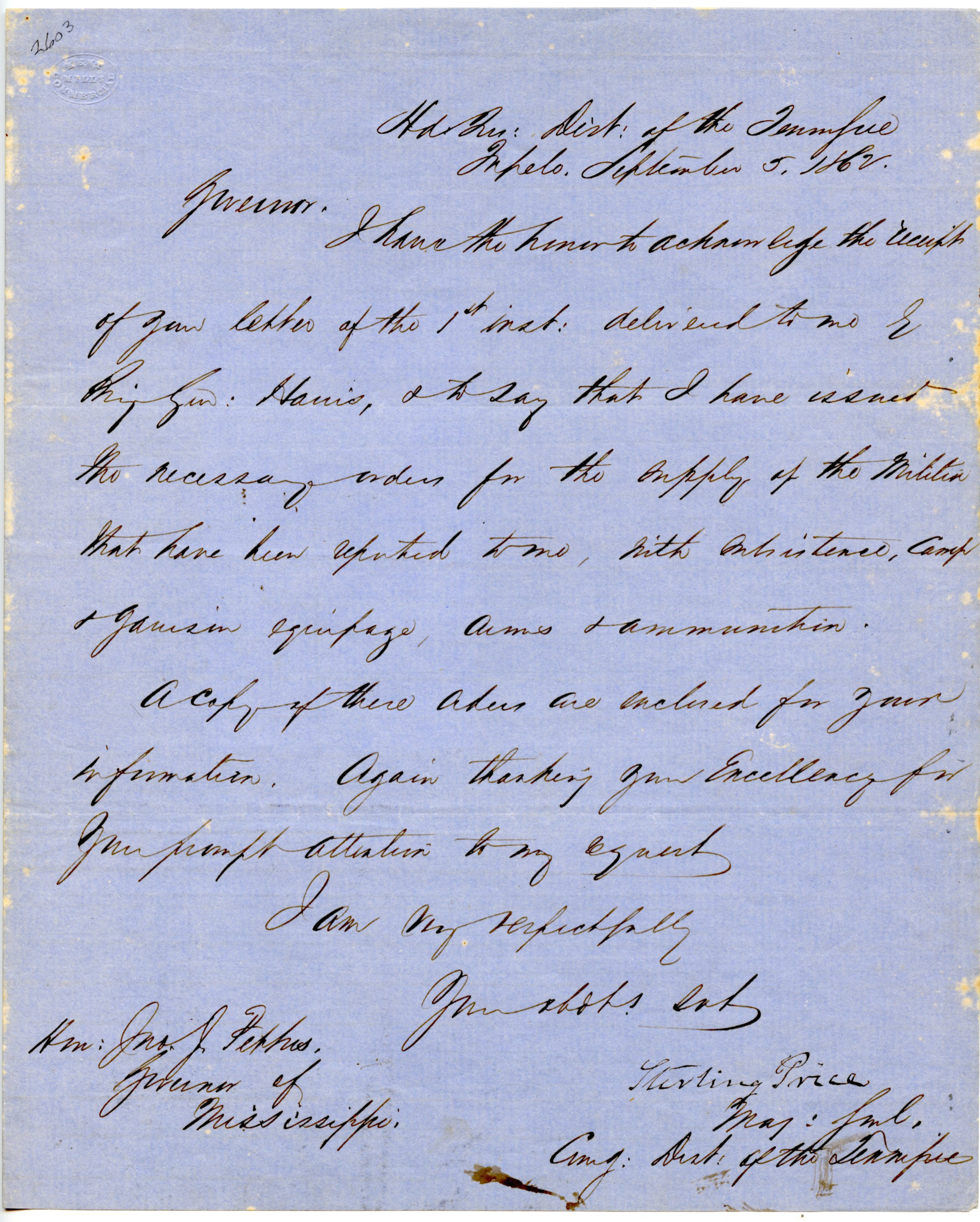
Letter Signed, 8 ½” x 10 ½”, to “Hon[orable] Jno. J. Pettus, Governor of Mississippi,” informing Pettus of the disposition of troops sent to reinforce the militia shortly before the Battle of Iuka, Mississippi, September 19, 1862, resulting in Price’s defeat by Union General Wiliam S. Rosecrans. Docketed on the reverse, presumably by Governor Pettus: “Gen[eral] Price writes in regard to his order to supply Militia & transmit copy of said order.”
“H[ea]d Q[uarte]rs Dist[rict] of the Tennessee
Tupelo [Mississippi], September 5, 1862
Governor,
I have the honor to acknowledge the receipt of your letter of the 1st inst[ant]; delivered to me by Brig[adier] Gen[eral] Harris, & to say that I have issued the necessary orders for the supply of the Militia that have been reported to me, with subsistence, Camp & Garrison equipage, Arms & ammunition.
A copy of these orders are enclosed for your information. Again thanking your Excellency for Your prompt attention to my request.
I am very respectfully,
Your ob[e]d[ien]t S[er]v[an]t,
Sterling Price
Maj[or] Gen[era]l
Com[mandin]g Dist[rict] of the Tennessee.”
Sound overall, with two horizontal folds; smearing of ink at the conclusion; text is unaffected by age spotting at the edges.
RANDALL, JAMES RYDER (1839-1908) Pro-Southern Poet & Journalist; Author of “Maryland, My Maryland,” thus known as the “Poet Laureate of the Lost Cause”
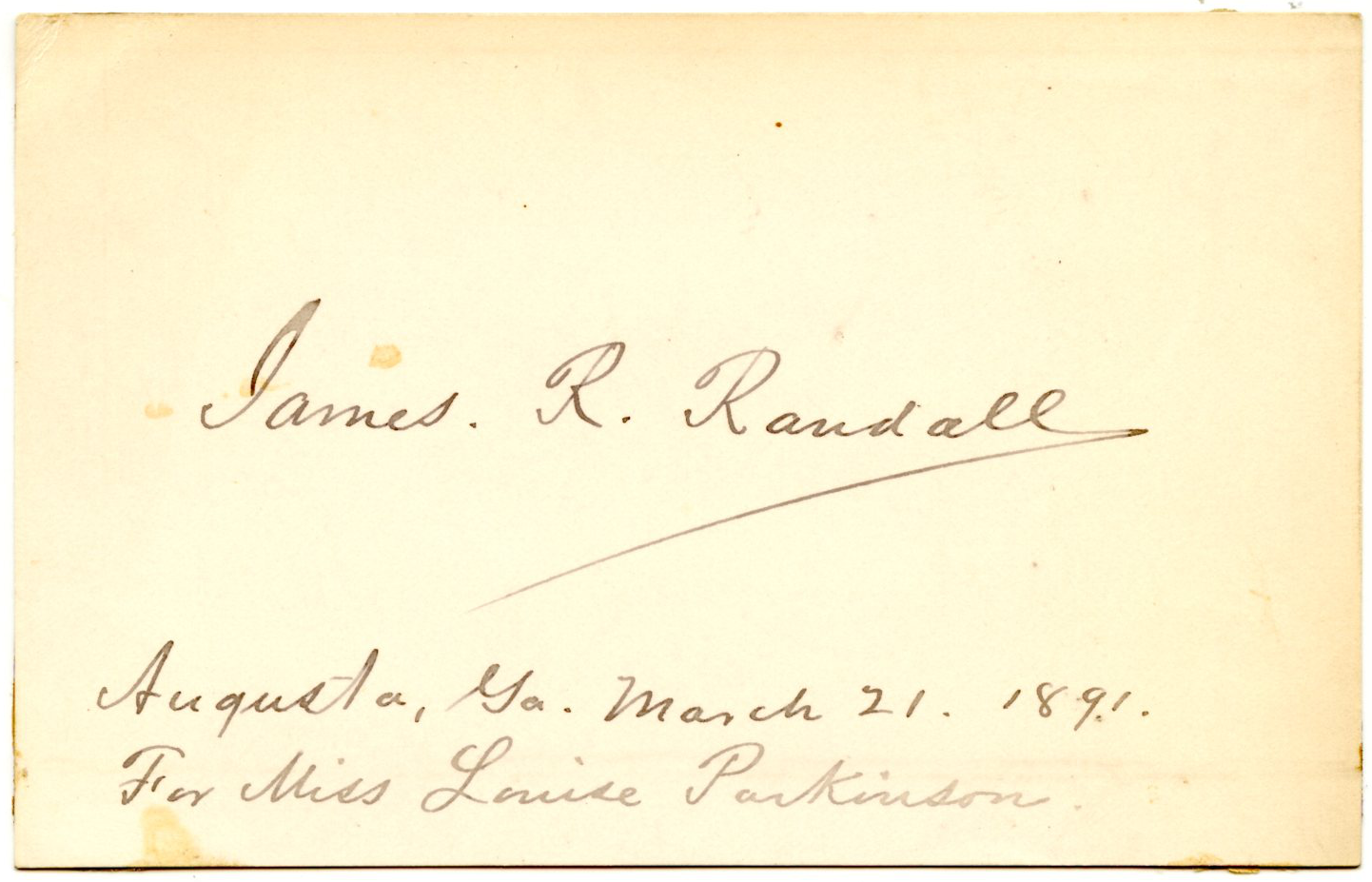
Signed Card, 3” x 4 ¾”, dated and inscribed, “James R. Randall, Augusta, G[eorgi]a. March 21, 1891. For Miss Louise Parkinson.”
Lightly and evenly toned, with several minor stains; bumping at the upper left corner; old mounting remnants on the reverse.
RANDOLPH, GEORGE WYTHE (1818-67) Confederate Brigadier General; Confederate Secretary of War- 1862
-100.png)
-100.png)
-100.png)
Civil War-Date Document Signed
Document Signed, an 8” x 10” folded four-page letter sheet, Richmond, Virginia, March 24, 1862, Geo. W. Randolph,” to “O. Sibley, Jr., Esq[uire], 3[r]d Ala[bama] Reg[imen]t, Care G.T. Lathrop, Engineer Bureau.” On an official, imprinted Confederate form, Randolph forwards an important printed Circular from previous War Secretary Judah P. Benjamin, included on the subsequent pages, detailing the provisions for the enlistment of volunteers. A further notation beneath is initialed “G.W.B.” The upper left corners of both leaves bear circular embossing with Virginia’s “SIC SEMPER TYRANNIS” motto.
Overall condition is very good, with light, even toning and two horizontal folds; minor smearing of ink at the conclusion of Randolph’s signature.
RAWLINS, JOHN AARON (1831-69) Union Brigadier General - Illinois; U.S. Secretary of War – 1869
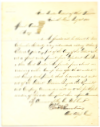
Civil War-Date Document Signed - General Grant banishes Prostitutes from the District of West Tennessee
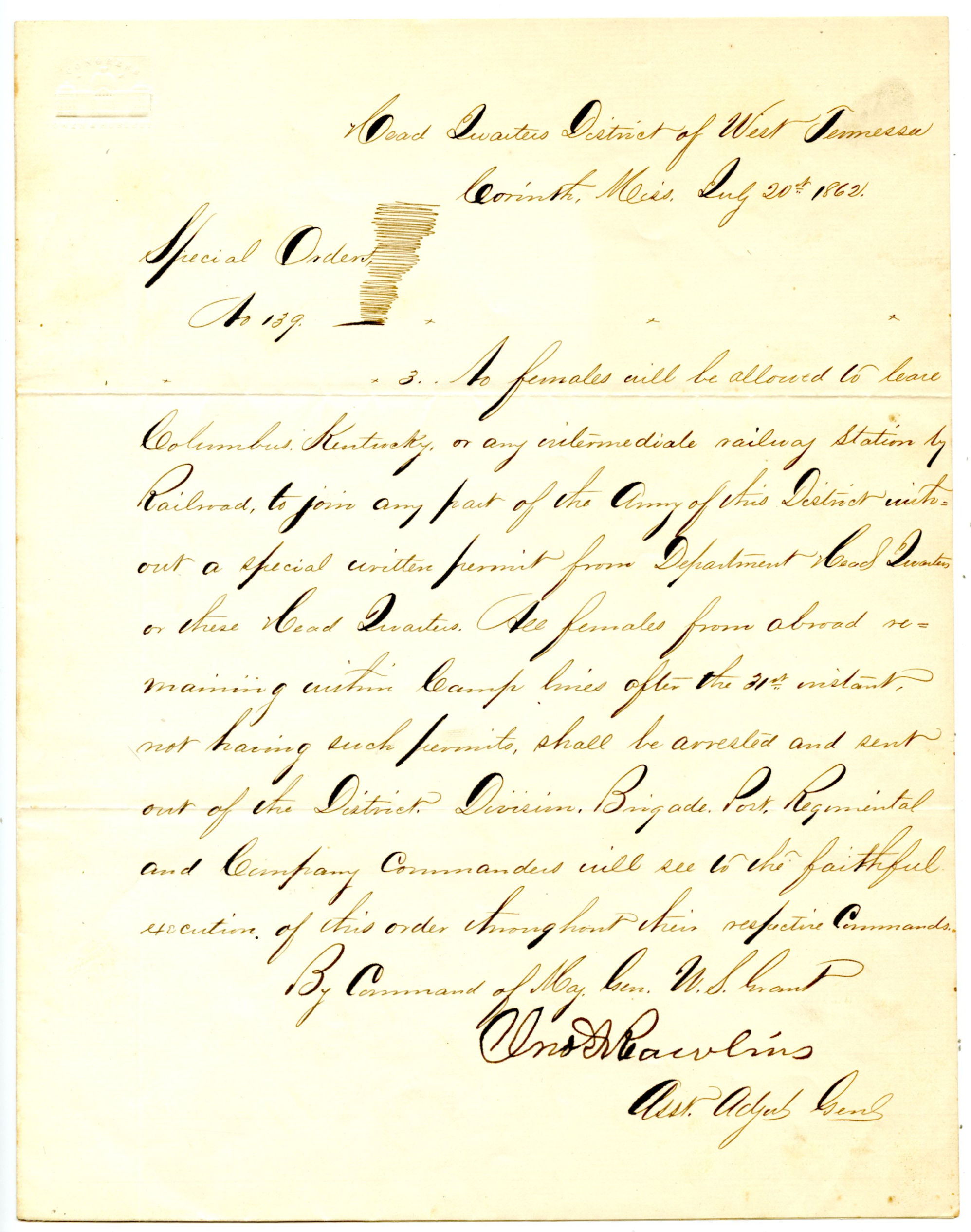
Document Signed, 7 ¾” x 10”, a manuscript special order, signed by Rawlins as assistant adjutant general on behalf of Major General Ulysses S. Grant. The order explicitly bans the unauthorized travel of women from northern rail points to the army’s encampments, along with their presence in camp.
“Head Quarters District of West Tennessee.
Corinth, Miss[issippi], July 20th 1862.
Special Order
No. 139.
No females will be allowed to leave Columbus, Kentucky, or any intermediate railway Station by Railroad, to join any part of the Army of this District without a special written permit from Department Head Quarters or these Head Quarters. All females from abroad remaining within Camp lines after the 31st instant, not having such permits, shall be arrested and sent out of the District. Division, Brigade, Port, Regimental, and Company Commanders will see to the faithful execution of this order throughout their respective Commands.
By Command of Maj[or] Gen[eral] U.S. Grant.
Jno. A. Rawlins,
Ass[istan]t Adj[uta]nt Gen[era]l.
As early-war offensives made inroads into Confederate territory, both east and west, the occupying Union Army was inevitably followed by another, consisting of profiteers and opportunists of all types, including prostitutes. By this order, Grant intends to thwart the proliferation of prostitution among army personnel in the newly occupied regions of Tennessee, northern Mississippi, and Alabama, secured by the recent Union victory at the Battle of Shiloh.
Excellent, with light, even toning and two horizontal folds.
RAWLINS, JOHN AARON (1831-69) Union Brigadier General; Close friend, confidant, and staff officer to General Ulysses S. Grant; U.S. Secretary of War - 1869
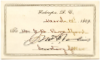
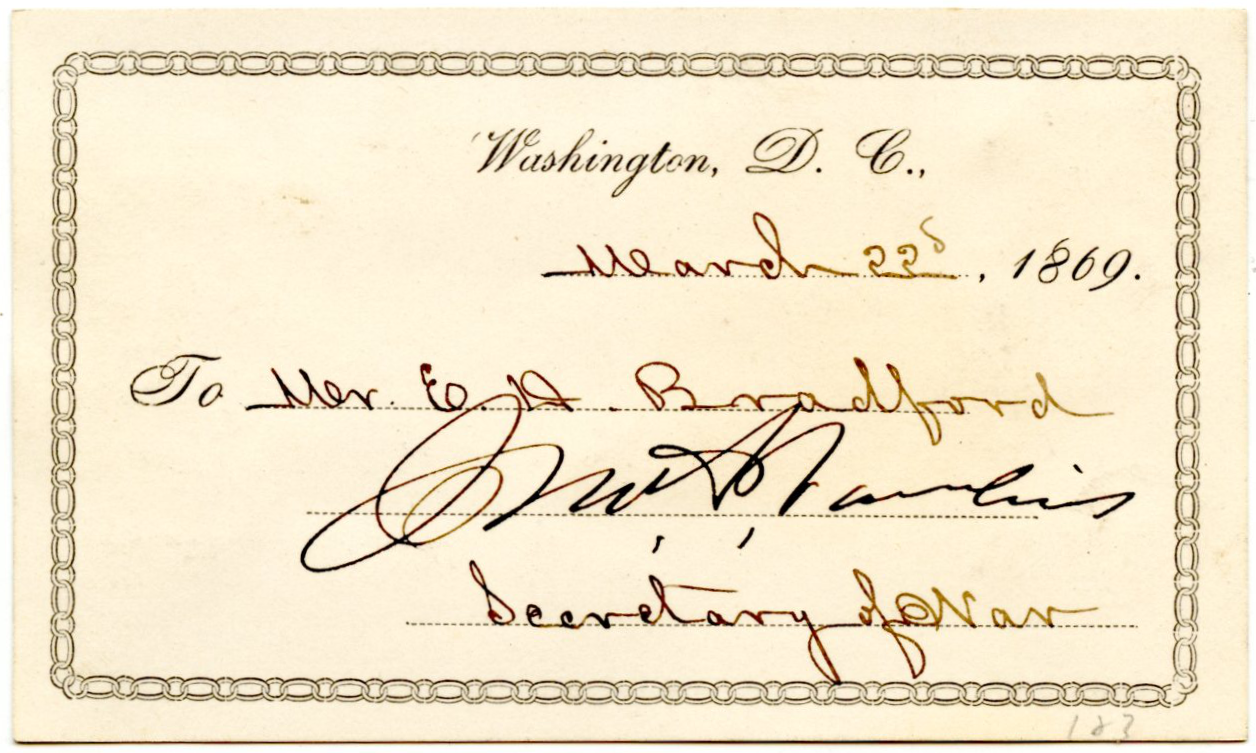
Signed Card, 2 ½” x 4”, March 22, 1869, Washington, D.C., “John A. Rawlins,” as U.S. Secretary of War. The recipient’s name, date, just nine days after he assumed office as secretary or war, and Rawlins’s title are accomplished in an unidentified clerical hand.
Excellent overall, with old mounting remnants on the reverse.
REYNOLDS, JOHN FULTON (1820-63) Union Major General – Pennsylvania; Killed-in-Action at the Battle of Gettysburg – July 1, 1863; Veteran of the Mexican War
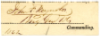
Civil War-Date Autograph
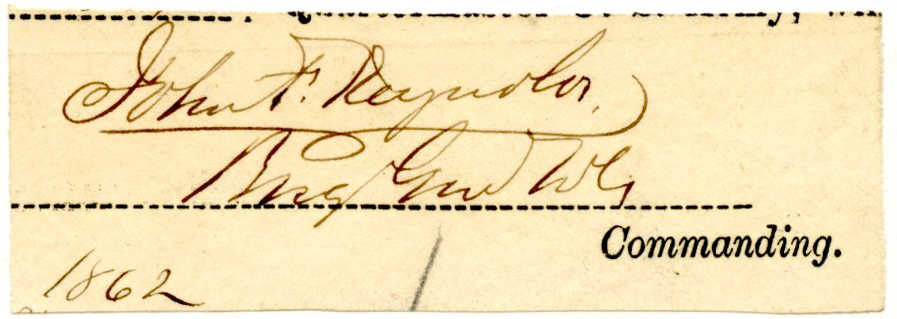
Signature & Rank, “John F. Reynolds, Brig[adier] Gen[era]l Vol[unteer]s,” on a 1” x 3” portion of a larger document, dated “1862” in an unidentified hand at lower left.
An excellent early-war example, with the rank Reynolds held from August 20, 1861 until promotion to major general, effective November 29, 1862.
ROBERTS, BENJAMIN STONE (1810-75) Union Brigadier General; Veteran of the Mexican War
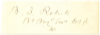
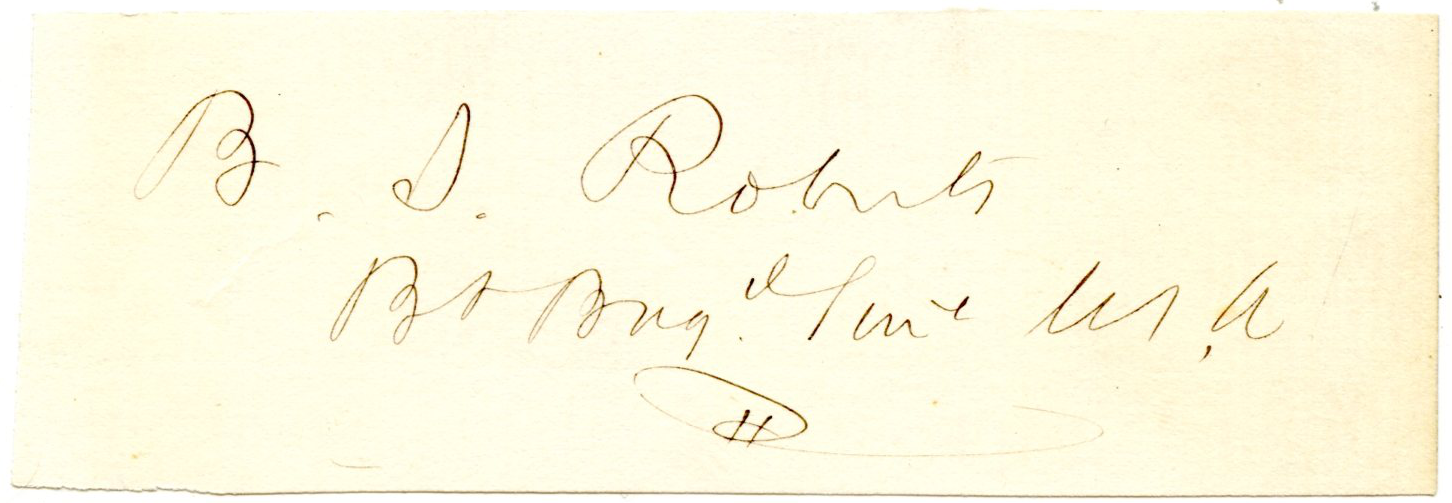
Signature & Rank, “B.S. Roberts, B[reve]t Brig[adie]r Gen[era]l U.S.A.,” on a 1 ½” x 4 ¾” slip of paper.
Excellent.
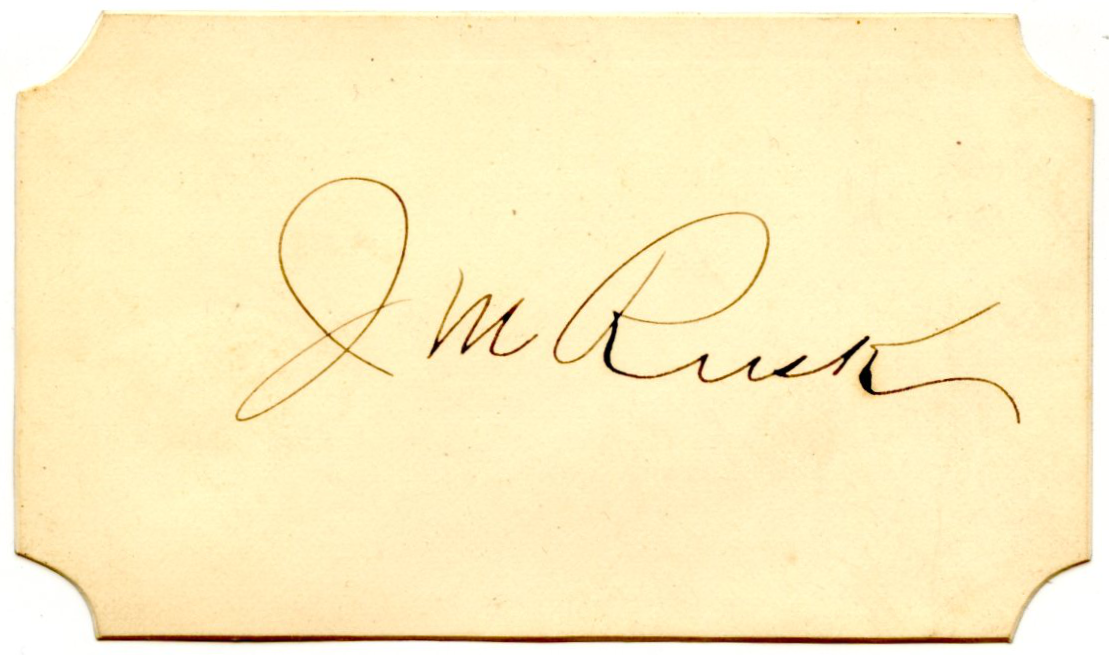
RUSK, JEREMIAH McLAIN (1830-93) Union Brevet Brigadier General; Lieutenant Colonel of the 25th Wisconsin Infantry; Governor of Wisconsin – 1882-89; U.S. Agriculture Secretary – 1889-93; U.S. Representative – Wisconsin – 1871-77
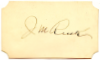
Signed Card, 2” x 3 ½”, “J.M. Rusk,” with bevelled edges and rounded corners.
Excellent, with light, even toning; old mounting remnants on the reverse.
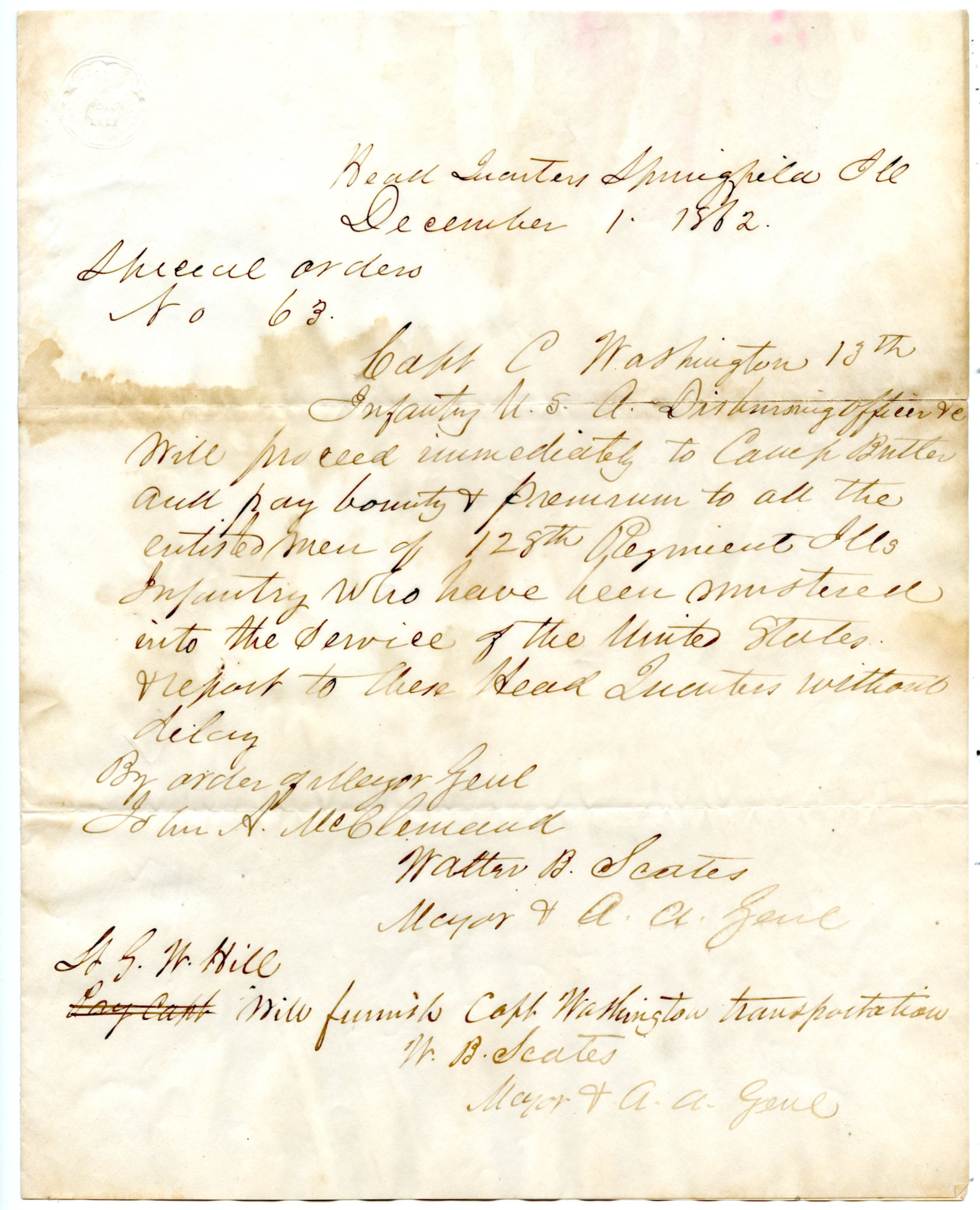
SCATES, WALTER BENNETT (1808-86) Union Brevet Brigadier General; Attorney General of the State of Illinois – 1836-37; Served as Chief Justice of the Illinois Supreme Court – 1855; Collector of Customs for the Port of Chicago – 1866-69
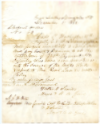
Civil War “Special Order,” directing a 13th U.S. Army Officer, mortally wounded at Vicksburg six months later, to report to Camp Butler
Document Signed, 8” x 10”, a manuscript special order, signed twice by Scates at the conclusion, directing 13th U.S. Infantry Captain Edward Crawford Washington, mortally wounded in the May 19, 1863 assault on Vicksburg, Mississippi, to report immediately to Camp Butler, near Springfield, Illinois, to enlist and pay bounty to the newly formed 128th Illinois Infantry.
“Head Quarters Springfield, Ill[inois], December 1, 1862. Special orders No. 63. Capt[ain] C. Washington, 13th Infantry, U.S.A. Disbursing Officer & c. Will proceed immediately to Camp Butler and pay bounty & premium to all the enlisted men of 128th Regiment Ill[inoi]s Infantry who have been mustered into the Service of the United States & report to these Head Quarters without delay. By order of Major General John A. McClernand. Walter B. Scates, Major & A[ssistant] A[djutant] Gen[era]l. L[ieutenan]t G.W. Hill Will furnish Capt. Washington transportation. W.B. Scates, Major & A.A. Genl.”
Exhibits the expected soiling, toning, and wear; water staining and clean separation, with no loss of paper, at the upper of two horizontal folds.
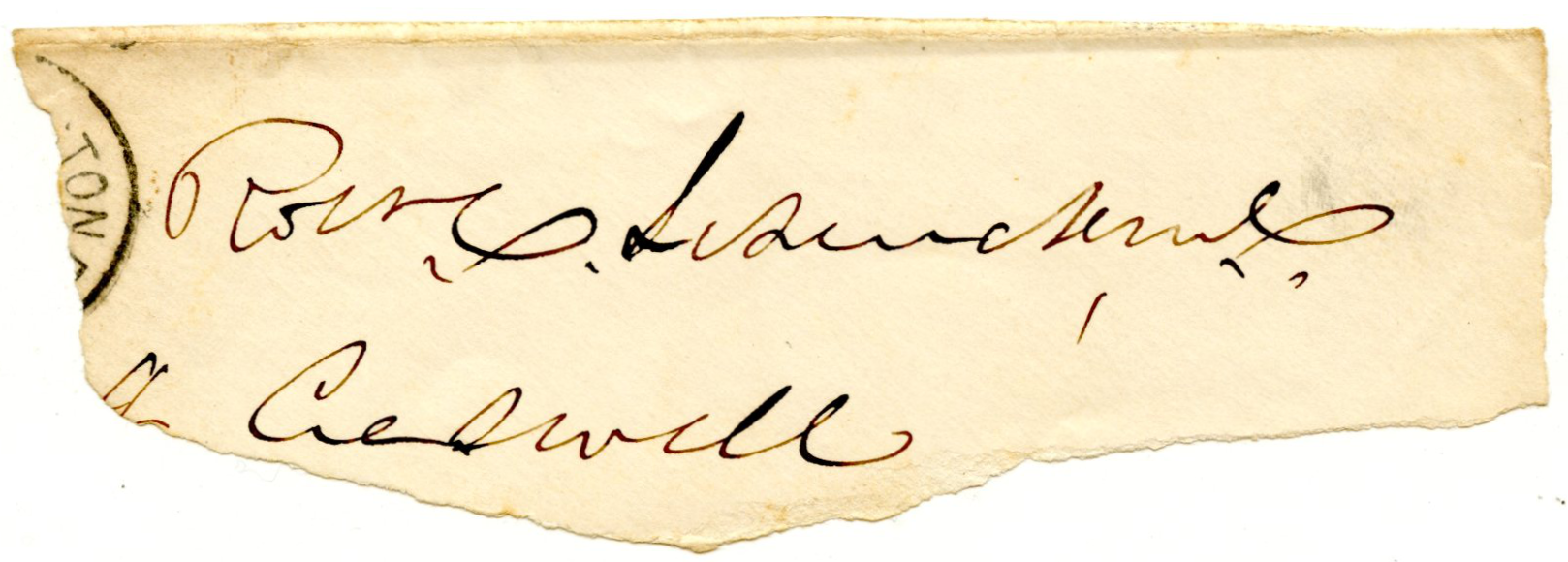
SCHENCK, ROBERT CUMMING (1809-90) Union Major General; U.S. Representative – Ohio – 1843-51 & 1863-71
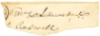
Franking Signature, as a post-war U.S. Representative from Ohio, “Robt. C. Schenck, M[ember] C[ongress],” on a 1 ½” x 5 ¼” portion of an envelope, with portions of the recipient’s address in Schenck’s hand beneath and a Washington, D.C. postmark at left.
Irregularly torn at the lower and left edges.
SCHENCK, ROBERT CUMMING (1809-90) Union Major General; U.S. Representative – Ohio – 1843-51 & 1863-71
Signature, as U.S. Representative, “Robt. C. Schenck, Ohio,” on a 5 ¾” x 8 ¾” portion of an album page.
Excellent.
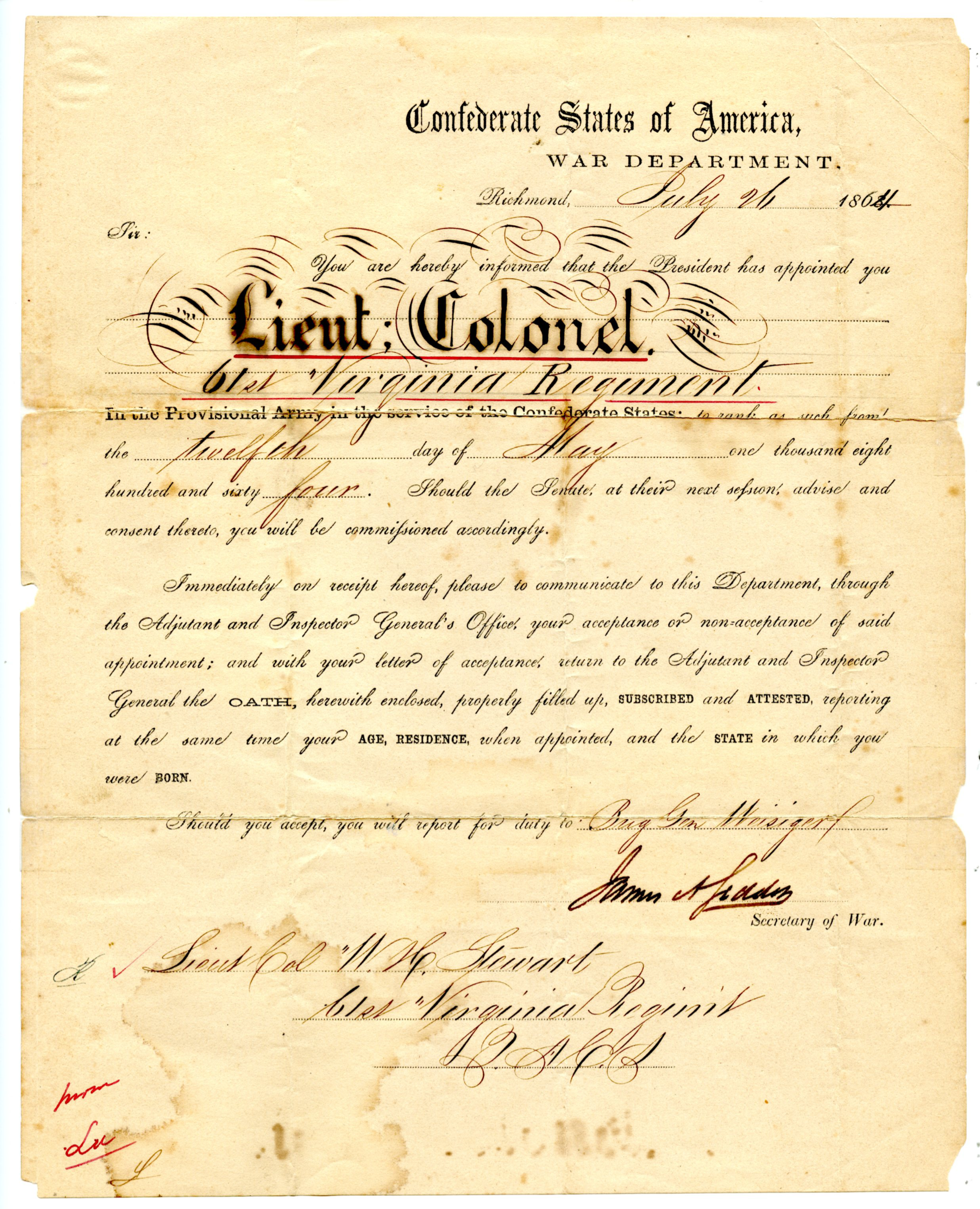
SEDDON, JAMES ALEXANDER (1815-80) Confederate Secretary of War – 1862-65; U.S. Representative – Virginia – 1845-47 & 1849-51
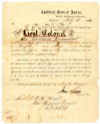
Appointing an Officer in the 61st Virginia Infantry
Civil War-Date Document Signed, on imprinted 8” x 10” Confederate War Department stationery, Richmond, Virginia, May 12, 1864, “James A. Seddon,” a partly printed appointment for William Henry Stewart to the rank of Lieutenant Colonel in the 61st Virginia Infantry. The unit was heavily engaged at the Civil War battles of Chancellorsville, Spotsylvania Court House, and Cold Harbor, Stewart being wounded at all three.
Lightly and evenly toned, with scattered stains and several chips at the corners and edges; there is a water stain at the lower left, well away from Seddon’s signature, and clean separation at two horizontal folds has been reinforced with archival tape on the reverse.
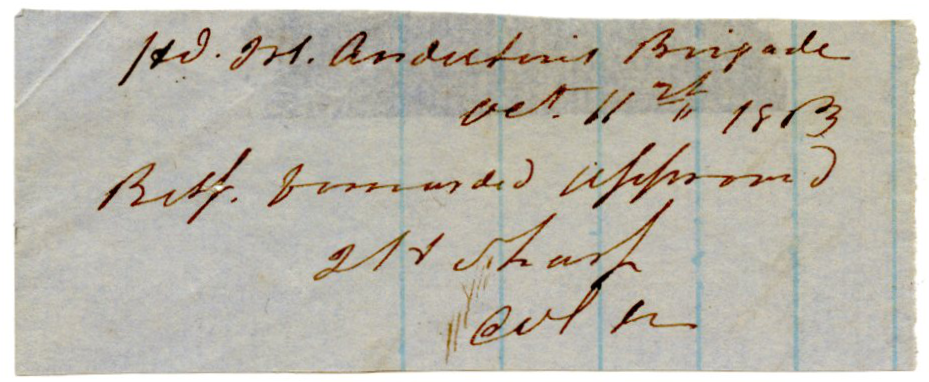
 SHARP, JACOB HUNTER (1816-78) Confederate Brigadier General; Saw action at the Civil War Battles of Shiloh, Stone’s River, Chickamauga, Missionary Ridge, Franklin, and Nashville; Speaker of the Mississippi State House of Representative – 1886-88
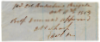
Civil War-Date Autograph Endorsement Signed
Autograph Endorsement Signed, on a 1 ¼” x 3” portion of a larger document, “H[ea]d Q[uarte]rs Anderson’s Brigade, Oct[ober] 11th 1863. Resp[ectfull]y forwarded Approved, J.H. Sharp, Col[onel] & c.”
Light wear, with a few light folds and pinholes. A rare autograph, this being only the second that we have offered for sale in the past thirty years.
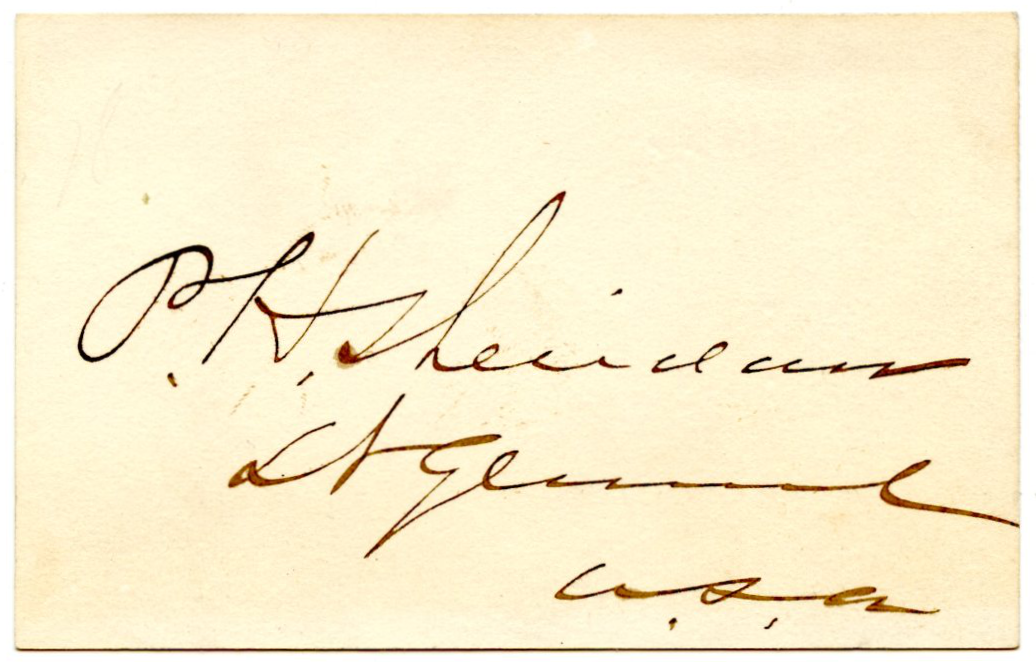
SHERIDAN, PHILIP HENRY (1831-88) Union Major General; Veteran of the Indian Wars; U.S. Army General – 1888; Commander-in-Chief of the U.S. Army – 1883-88
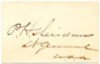
Signed Card, 2” x 3 ¼”, with rank, “P.H. Sheridan, L[ieutenan]t General, U.S.A.”
Excellent, with light, even toning and several small areas of very minor bleeding of ink.
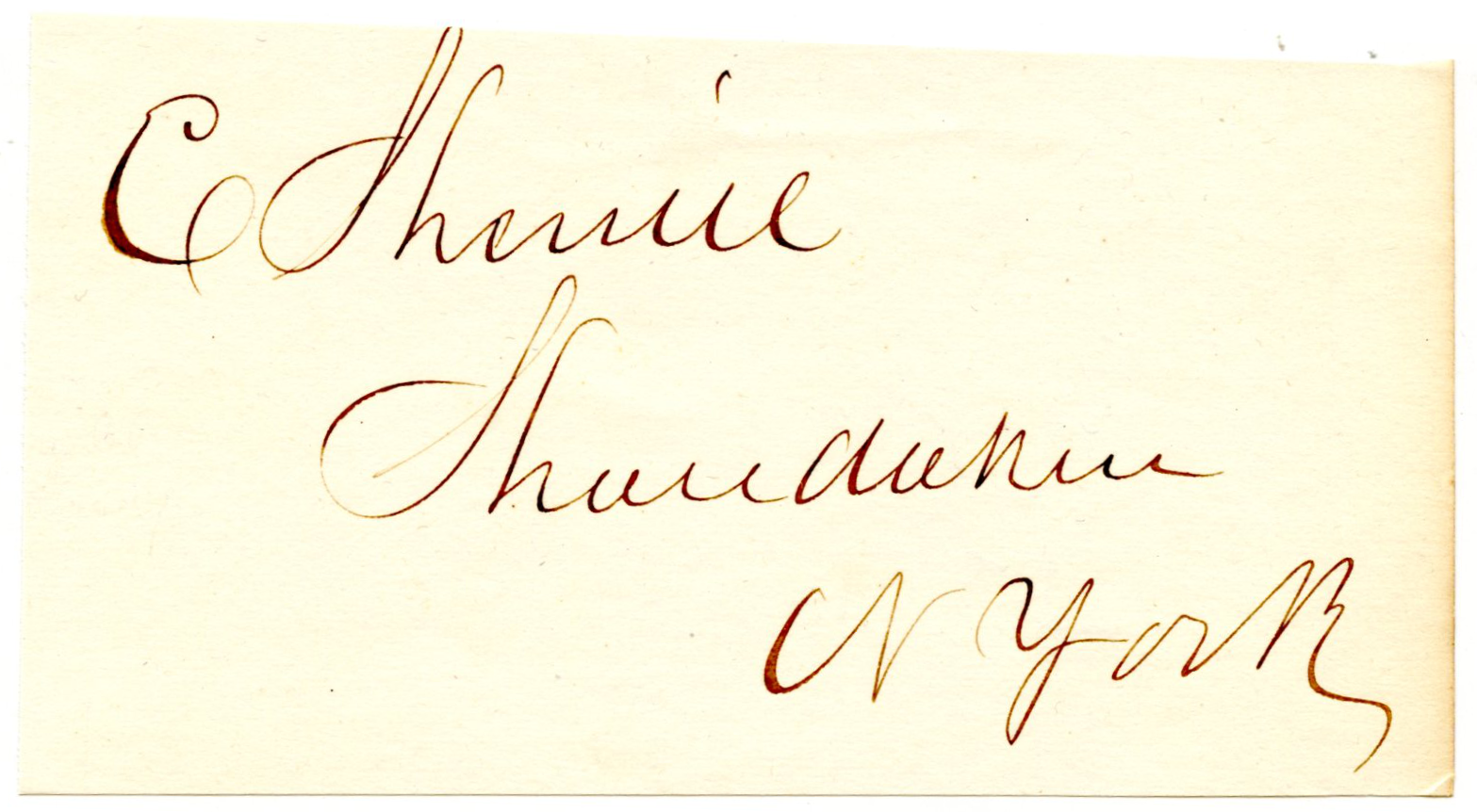
SHERRILL, ELIAKIM (1813-63) Union Colonel - 126th New York Infantry; Led a brigade in the Army of the Potomac; Mortally wounded during Pickett’s Charge at the Battle of Gettysburg – July 3, 1863; U.S. Representative – New York – 1847-49
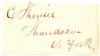
Signature, as U.S. Representative from New York, “E. Sherrill, Shandaken, N. York,” on a 2 ¾” x 5” portion of an album page.
Lightly and evenly toned; somewhat closely trimmed at the upper edge.
SMITH, CALEB BLOOD (1808-64) U.S. Interior Secretary – 1861-63 – Appointed by President Abraham Lincoln; U.S. Representative – Indiana - 1843-49

Civil War-Date Letter Signed – a resident seeks a pass to visit family in the Confederate town just two weeks before the Battle of Fredericksburg, Virginia – December 11-15, 1862
Letter Signed, 7 ¾” x 9 ¾”, as Civil War Interior Secretary in the cabinet of Abraham Lincoln. Addressing army Commander-in-Chief Henry Wager Halleck, Smith seeks a pass for “a loyal man” of the town shortly before the pivotal Civil War battle of Fredericksburg, Virginia.
“Dep[artmen]t of the Interior
Wash[ington], Nov[ember] 24, 1862
Sir,
The Bearer Mr. C.B. Cole of Fredericksburg Vir[ginia] desires to visit his family who are residing there. He is a loyal man of that State and you will gratify me very much if you will furnish him with the proper pass.
Very Respectfully,
Your obedient Servant,
Caleb B. Smith
Maj[or] Gen[era]l Halleck
Commander in Chief, & c.”
Excellent, with light, even toning and two horizontal folds.
SMITH, GUSTAVUS WOODSON (1821-96) Confederate Major General; Veteran of the Mexican War
-100.png)
-100.png)
A West Point, New York Postmark
Autograph Letter Signed, 7 ¾” x 9 ¾”. As a young, antebellum U.S. Army officer, Smith communicates regarding the conveyance of funds. Addressed by Smith to a banking company in New Orleans, the integral leaf bears a desirable postmark from West Point, New York, home of the U.S. Military Academy, where Smith was at the time employed as an instructor.
“West Point, N[ew] Y[ork], Dec[ember] 20th 1850.
Messrs. Watts & De Saulles,
Gentlemen,
I received yesterday yours of the 9th Dec[ember], enclosing “original of J. Corning & Co[mpany]’s check on Corning & Co[mpany] New York,” dated Dec[ember] 9th No. 27089 in my favor for five hundred dollars, $500. I will in compliance with your request acknowledge the receipt of the same to M.A. Smith by this days mail.
Very Respectfully Yours,
Gus. W. Smith,
Capt[ain] U.S. Army.”
_________________________
Heavier staining and wear at the edges, with the expected folds and a few chips at the edges; there is significant wrinkling of paper in the lower corners and edges, all well away from the text of the letter.
SMITH, MORGAN LEWIS (1822-74) Union Brigadier General; Early-war Colonel of the 8th Missouri Infantry
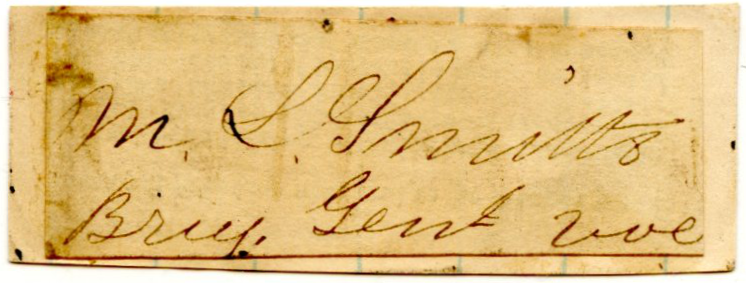
Signature & Rank, “M.L. Smith, Brig[adier] Gen[era]l Vol[unteers],” on a ¾” x 2 ¼” slip of paper, probably removed from a war-date document. Affixed to slightly larger backing.
General soiling, staining, and wear.
 9164-1995.png)
 9164-1995.png)
 9164-1995.png)
-1999.png)
-1999.png)
-1999.png)


-1995.png)
-1995.png)