
Civil War
FOOTE, ANDREW HULL (1806-1863) Union Navy Officer, promoted to Rear Admiral on July 16, 1862
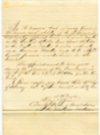
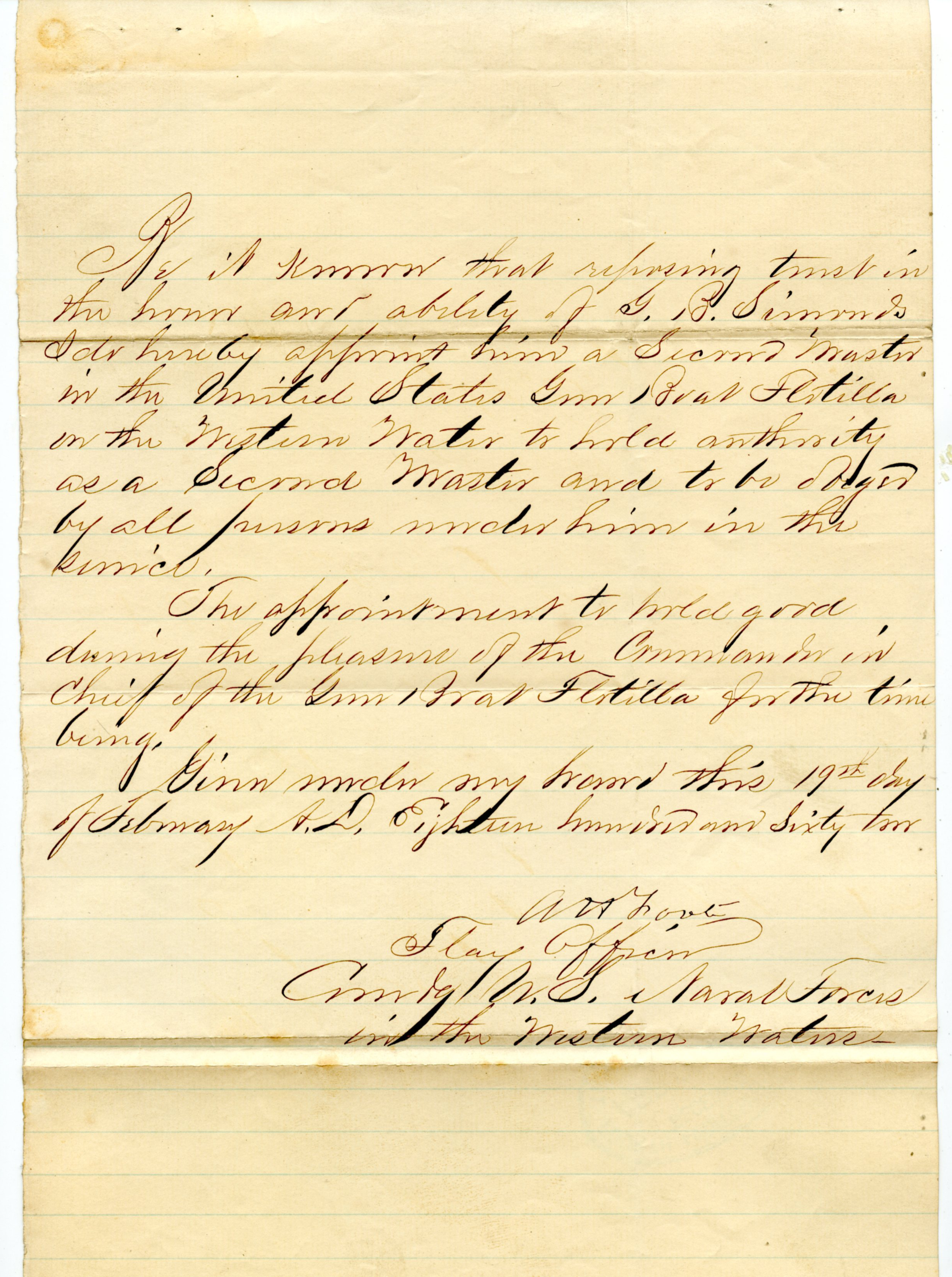
Just days after the capture of Fort Donelson, Foote makes an appointment in the Western Gun Boat Flotilla, while General Ulysses S. Grant emerges as a champion of the Union.
Civil War-Date Document Signed, 8” x 12 ½”, a manuscript order appointing one G.B. Simmonds to the rank of second master. Fort Donelson, at the time a Confederate installation on the Cumberland River in Tennessee, was surrendered on February 16, 1862, just three days prior to this order. Union forces, including Flag Officer Foote, were under the command of General Ulysses S. Grant, whose action during the siege, battle, and capitulation – specifically his demand for “unconditional and immediate surrender” of the Confederate command at the fort - propelled him into national prominence.
“Be it known that reposing trust in the honor and ability of G.B. Simmonds, I do hereby appoint him a Second Master in the United States Gun Boat Flotilla on the Western Water to hold authority as a Second Master and to be obeyed by all persons under him in the service. The appointment to hold good during the pleasure of the Commander in Chief of the Gun Boat Flotilla for the time being. Given under my hand this 19th day of February A.D. Eighteen hundred and Sixty two. A.H. Foote, Com[man]d[in]g U.S. Naval Forces in the Western Waters.”
Overall condition is very good, with light, even toning, a few minor stains, and the expected folds.
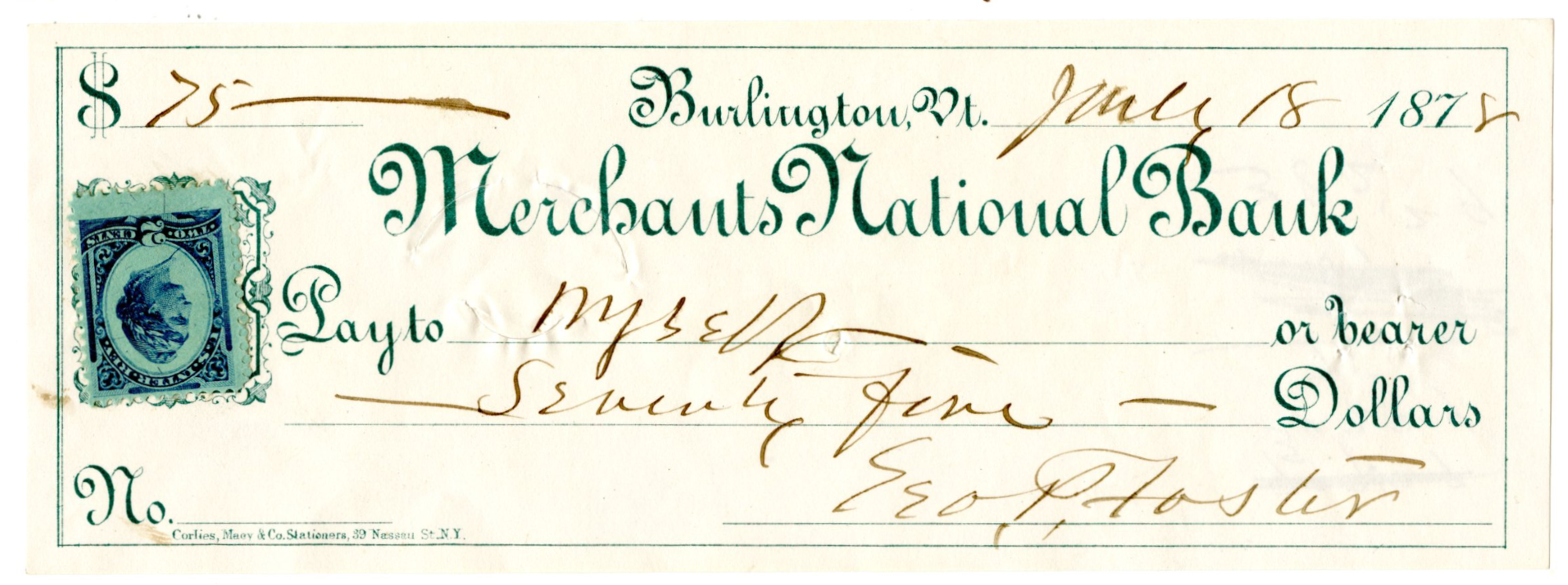
FOSTER, GEORGE PERKINS (1835-79) Union Brevet Brigadier General; Colonel of the 4th Vermont Infantry; U.S. Marshal for the District of Vermont – 1870-79
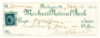
Document Signed, Burlington, Vermont, July, 18, 1878, “Geo. P. Foster,” a partly printed 2 ¾” x 7 ½” check, also accomplished by Foster, payable to “Myself” for seventy-five dollars.
The signature is unaffected by several bank cancellations.
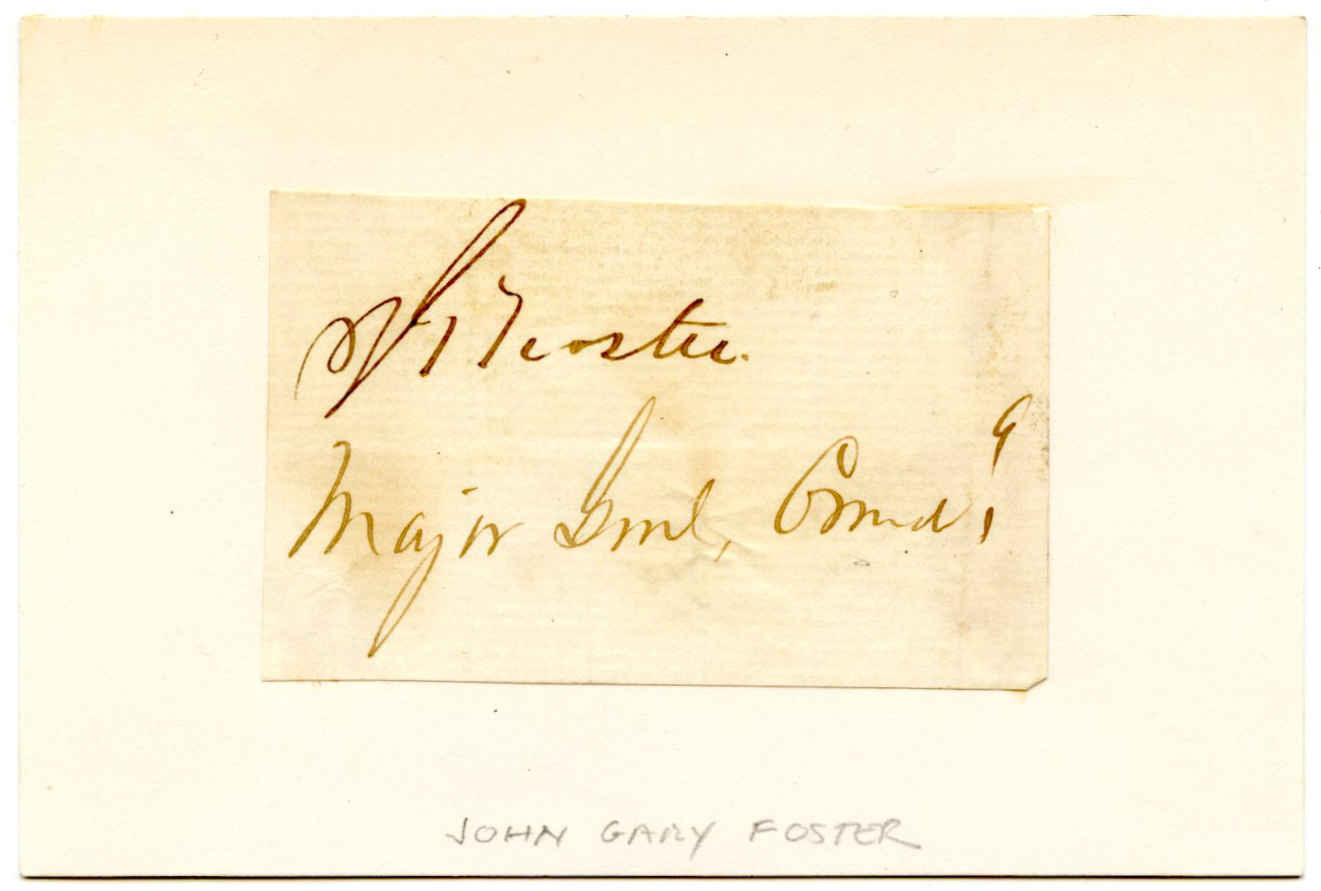
FOSTER, JOHN GRAY (1823-74) Union Major General; Veteran of the Mexican War
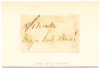
Civil War-Date Signature
Signature, with rank in another hand, “J.G. Foster, Major Gen[era]l Com[mandin]g,” on a 1 ½” x 2 ½” slip of paper.
Lightly and evenly toned, with minor staining and wear; affixed to a larger, heavier card, with old mounting remnants on the reverse.
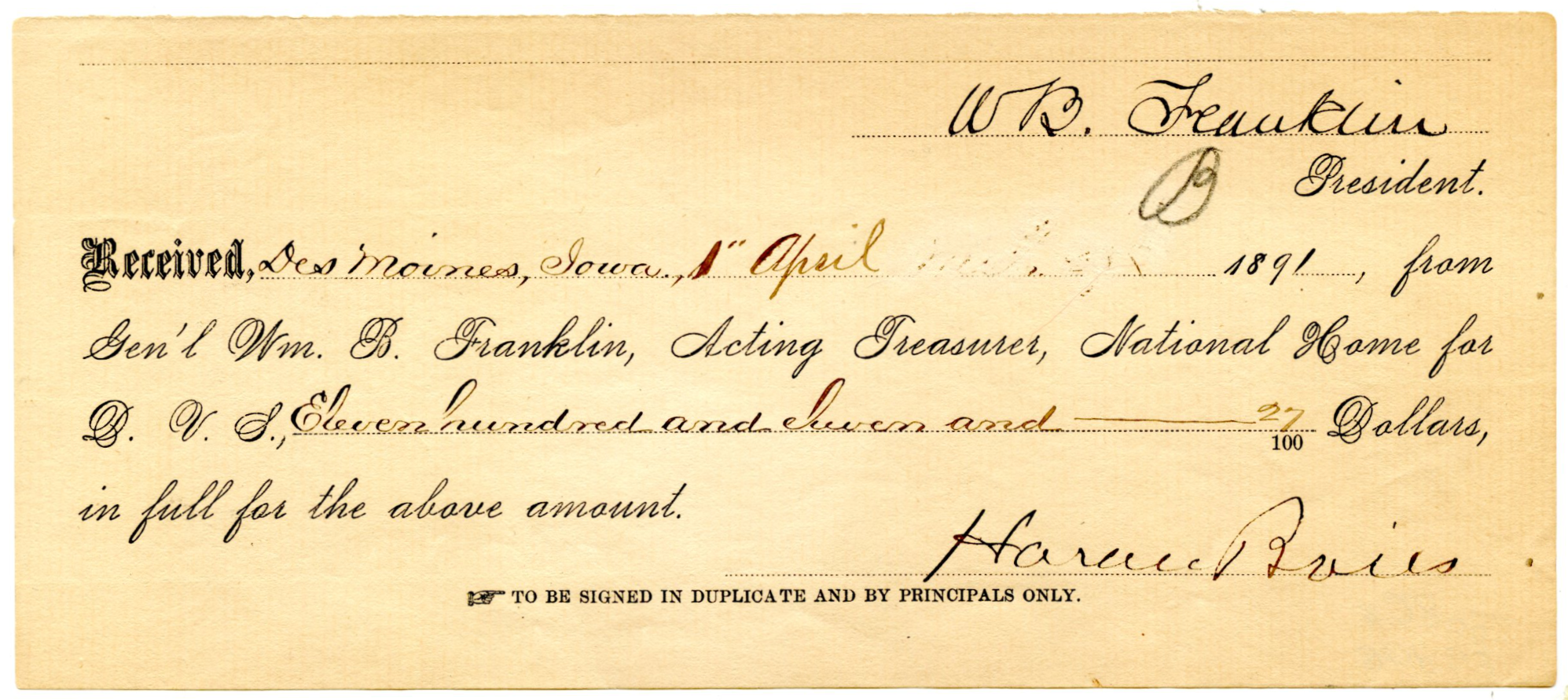
FRANKLIN, WILLIAM BUEL (1823-1903) U.S. Army Officer; Union Major General during the American Civil War
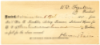
FRENCH, LUTHER PIERCE (1812-95) Union Chaplain – 20th Maine Volunteer Infantry
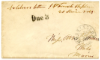
Civil War-Date – as Chaplain of the 20th Maine Infantry
Signed Envelope, 3” x 5 ¼”, “Soldiers letter, L.P French, Chaplain 20 Maine Vol[unteer]s,” originally containing a letter (no longer present) from a soldier in the 20th Maine Volunteer Infantry, the unit notably led by Colonel Joshua Lawrence Chamberlain at the Battle of Gettysburg; bearing a Washington, DC postmark from December of an indiscernible year, along with a “Due 3” handstamp.
Lightly and evenly toned, with the expected soiling and wear, particularly at the edges.
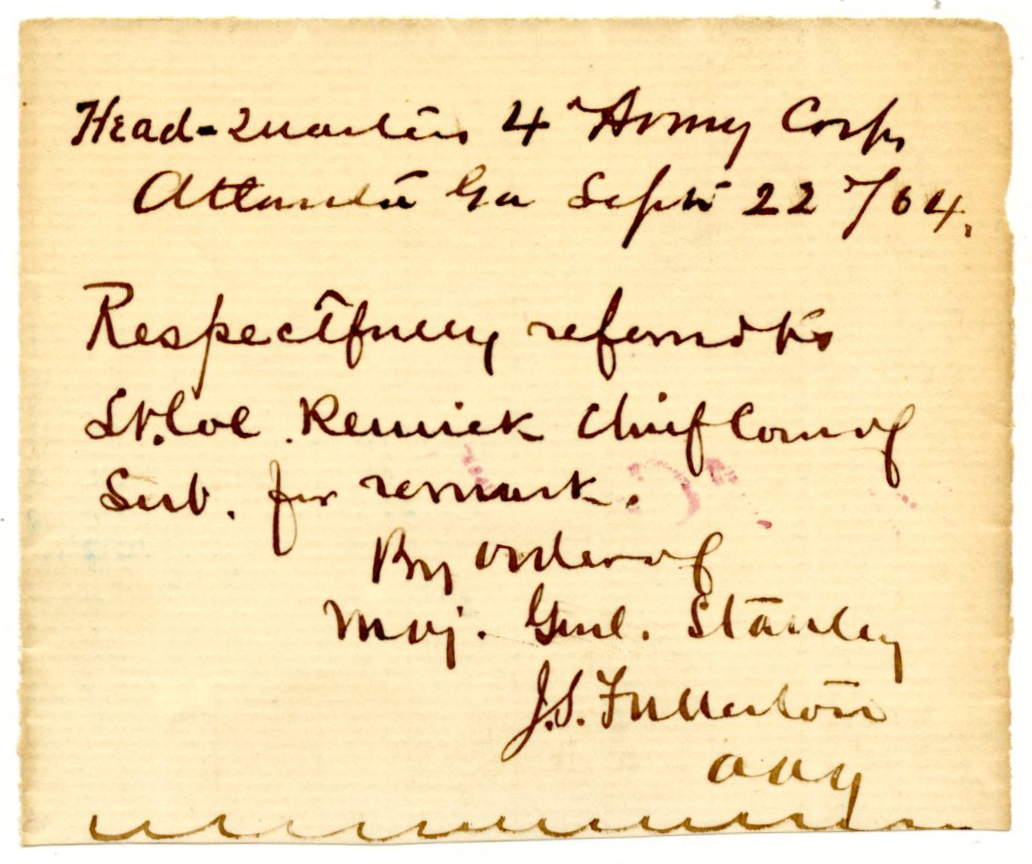
FULLERTON, JOSEPH SCOTT (1835-97) Union Brevet Brigadier General; Lieutenant in the 2nd Missouri Infantry; Served on the staff of Union General Gordon Granger
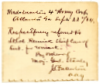
Civil War-Date
Autograph Endorsement Signed, on a 2 ¾” x 3 ¼” slip of paper, removed from a larger document; dated from Atlanta, Georgia just three weeks after the fall of the city to General William Tecumseh Sherman, his action there earning Fullerton the appointment to brevet brigadier general.
“Head-Quarters 4th Army Corps, Atlanta, Sept[embe]r 22/[18]64. Respectfully referred to L[ieutenan]t Col[onel] Remick, Chief Com[mandin]g Sub[sistence] for remark. By order of Maj[or] Gen[era]l Stanley, J.S. Fullerton, A[ssistant] A[djutant] G[eneral].”
Lightly and evenly toned, with a few small chips at the edges.
 GARNETT, RICHARD BROOKE (1817-63) Confederate Brigadier General - Virginia; Killed-in-Action during Pickett’s Charge at the Battle of Gettysburg - July 3, 1863
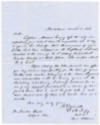
Very Rare Autograph Letter Signed – returning the remains of a West Point classmate, mortally wounded at the Mexican War Battle of Churubusco
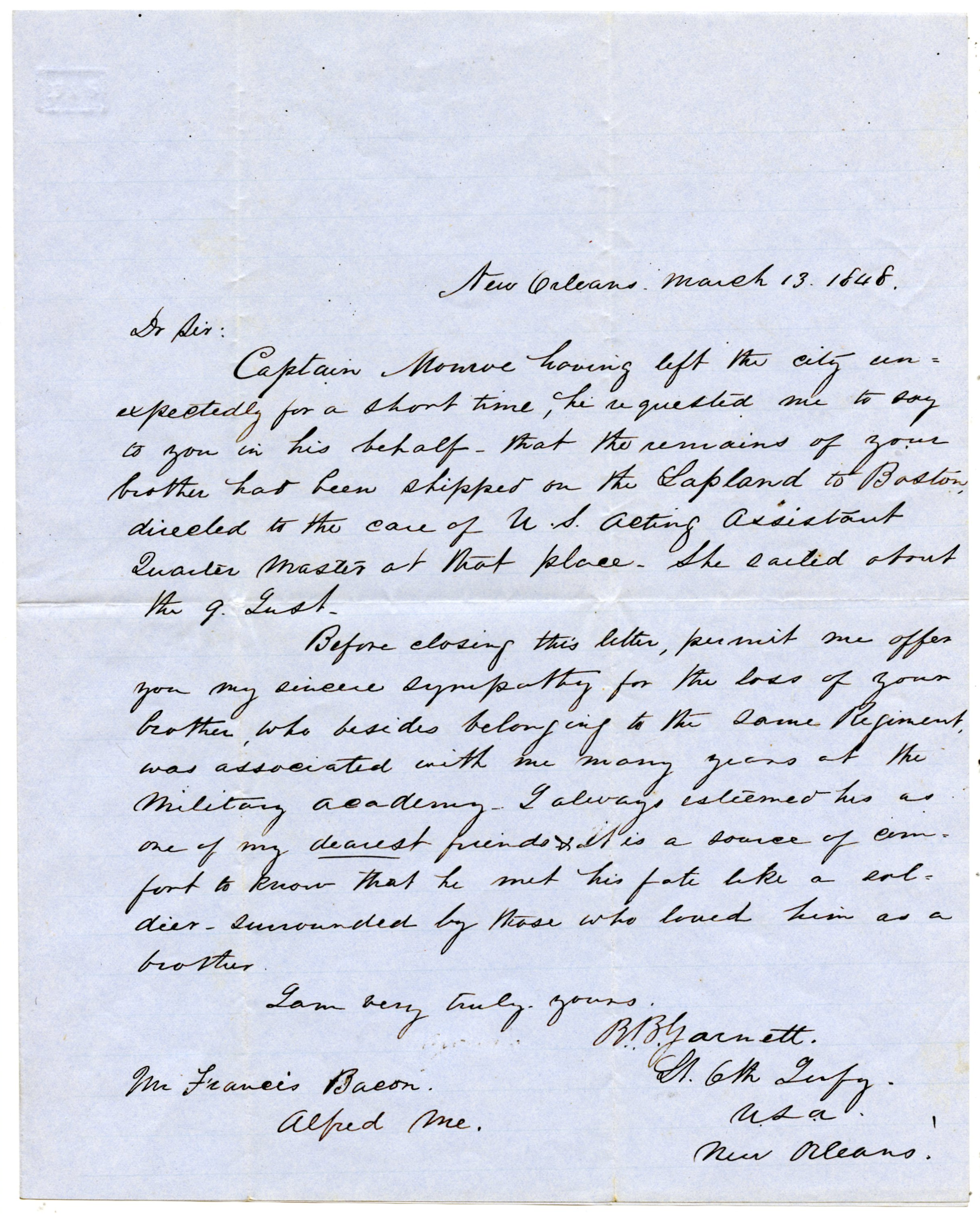
Autograph Letter Signed, 8” x 10”, to “Mr. Francis Bacon, Alfred, M[ain]e,” returning the remains of his brother, Lieutenant John Danforth Bacon, who died on October 12, 1847 from wounds received at the Mexican War Battle of Churubusco.
“New Orleans, March 13, 1848.
D[ea]r Sir:
Captain Monroe having left the city unexpectedly for a short time, he requested me to say to you in his behalf – that the remains of your brother had been shipped on the Lapland to Boston, directed to the care of U.S. Acting Assistant Quarter Master at that place. She sailed about the 9[th] Inst[ant].
Before closing this letter, permit me to offer you my sincere sympathy for the loss of your brother, who besides belonging to the same Regiment, was associated with me many years at the Military Academy. I always esteemed his as one of my dearest friends & it is a source of comfort to know that he met his fate like a soldier – surrounded by those who loved him as a brother.
I am very truly yours,
R.B. Garnett,
L[ieutenan]t 6th Inf[antr]y.
U.S.A.
New Orleans
Excellent overall, with the expected original folds.
GETTY, GEORGE WASHINGTON (1819-1901) Union Brigadier General; Lieutenant in the 2nd Missouri Infantry; Served on the staff of Union General Gordon Granger; Veteran of the Mexican and Seminole Wars
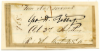
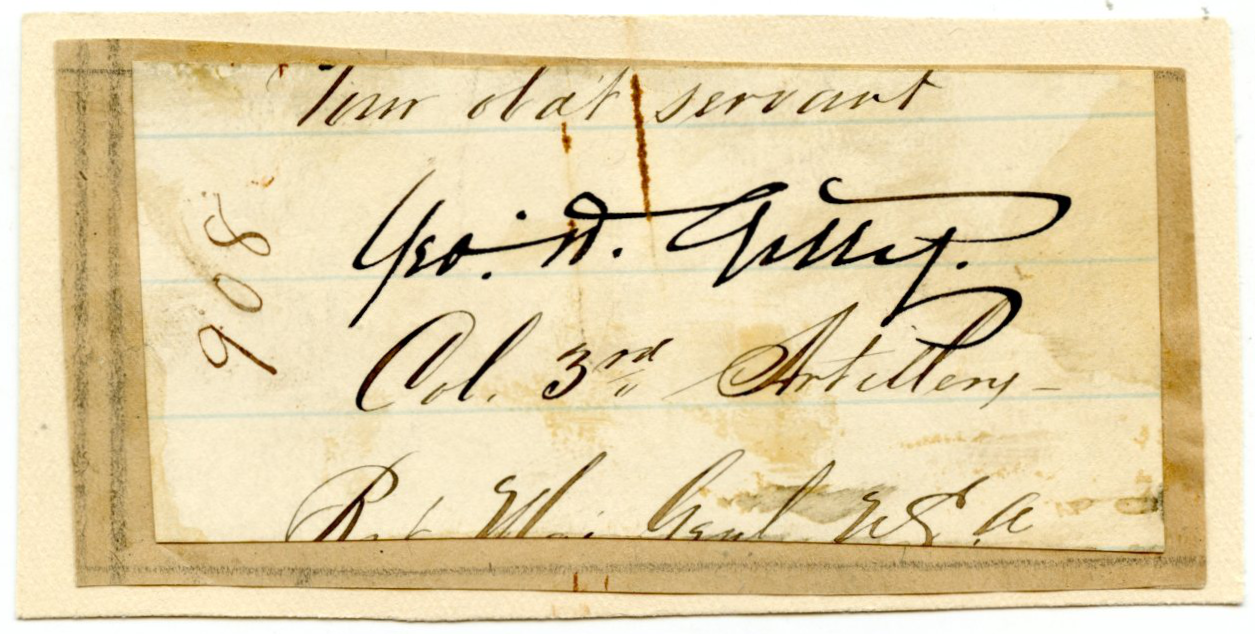
Signature, with closing and rank in another hand, “Your ob[edien]t servant, Geo. W. Getty, Col[onel] 3rd Artillery,” on a 1 ½” x 3 ¼” slip of paper, removed from a larger letter; affixed to heavier backing.
Boldly signed; general staining and wear throughout.
GLADDEN, ADLEY HOGAN (1810-62) Confederate Brigadier General; Mortally wounded while leading the 1st Louisiana Infantry at the Battle of Shiloh – April 6, 1862; Veteran of the Mexican War & the Second Seminole War
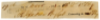
Civil War-Date Signature
Signature & Rank, “A.H. Gladden, Brig[adier] Gen[era]l,” on a 1” x 6” portion of a partly printed Confederate document, December 18, 1861.
Evenly toned, with old glue staining on the reverse.
GORDON, JOHN BROWN (1832-1904) Confederate Major General; U.S. Senator – Georgia – 1873-80 & 1891-97; Governor of Georgia – 1886-90
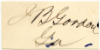
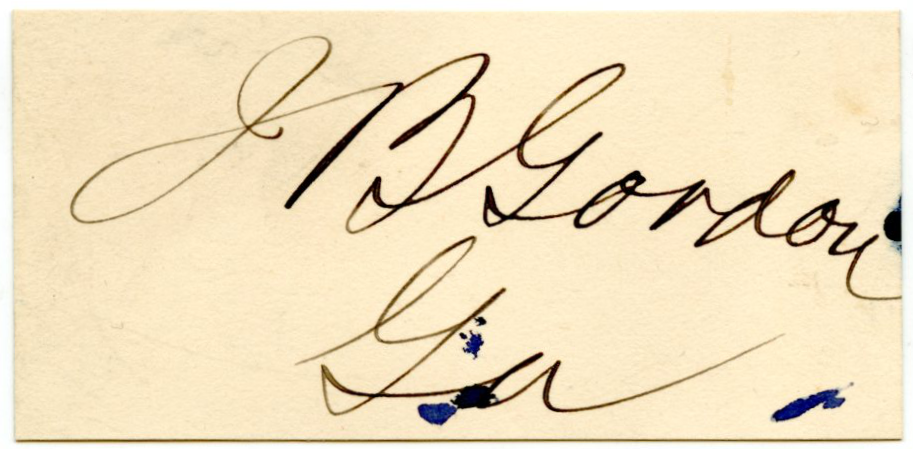
Signed Card, 1 ½” x 3”, as U.S. Senator from Georgia, “J.B. Gordon, G[eorgi]a.”
Lightly and evenly toned, with a few ink stains; old mounting traces on the reverse.
GORMAN, WILLIS ARNOLD (1816-76) Union Brigadier General; Early-war Colonel of the 1st Minnesota Infantry; Minnesota Territory Governor – 1853-57; U.S. Representative – Indiana – 1849-53; Veteran of the Mexican War
-100.png)
-100.png)
Civil War-Date Autograph Letter Signed – with excellent Vicksburg Campaign content
Autograph Letter Signed, two pages, front and reverse of an imprinted 8” x 10 page as Commander of the District of Eastern Arkansas. In the early stages of the Vicksburg Campaign, Gorman sends a highly detailed account of operations under his command to Admiral David Dixon Porter. Worthy of further study.
“St. Charles [Arkansas], Jan[uar]y 20th 1863
Acting Rear Admiral
D[avid] D[ixon] Porter
Admiral:
Your dispatch of the 19th (yesterday) was duly rec[eive]d at 8 A.M. Today. All my transports will be at the mouth tomorrow. From there I will row up to Helena, as each boat has Artillery, Cavalry and Infantry and I cannot fit out the force I am going to send to Maj[or] Gen[era]l McClernand at any other place. I will send for the Vicksburg Expedition all the force possible, at least one full brigade, one field battery fully equipped, and I think I may be able to send two brigades, being one more than the General asks.
My success with the Expedition up White River has been complete. At St. Charles I captured a large amount of forage, corn &c. and some prisoners. At Duvall’s Bluff I took two 8 inch Columbiads with carriages in complete order, 25 prisoners with 70 new Enfield rifles, some stores, tents, &c., destroyed 3 cars & R[ail] R[oad] track, and burnt two Bridges – one 90 and the other 200 feet long.
At Des Arc we captured 100 prisoners, several hundred rounds of fixed 6 po[und] ammunition, several thousand bushels of Gov[ernmen]t corn, a large rebel mail, and destroyed their Telegraph. All the force of the enemy have crossed the Arkansas [River] to Little Rock.
I should have gone to Little Rock dire[c]t if I could have crossed the sea of mud and wa[ter] between there and Duvall’s Bluff, but this is impossible at the present, and my orders were such as to comp[lete] my return at once.
I am Admiral very respectfully y[ou]r
Ob[edient] Serv[an]t,
W.A. Gorman
Brig[adier] Gen[ra]l Com[mandin]g.”
Lightly and evenly toned, with two horizontal folds; an old paper mounting strip at the right edge of the reverse obscures a few letters of text.
GOVAN, DANIEL CHEVILETTE (1829-1911) Confederate Brigadier General; Early-war Colonel of the 2nd Arkansas Infantry; Led a brigade in the Army of Tennessee at the Battles of Franklin & Nashville; U.S. Indian Agent in Tulalip, Washington - 1894-97
-100.png)
-100.png)
Document Signed, Everett, Washington, January 13, 1898, “D.C. Govan, U.S. Indian Agent,” a partly printed 2 ¾” x 6 ½” check, also accomplished by Govan, drawn on The Everett National Bank for fifteen dollars. Signed a second time on the reverse, “Witness, D.C. Govan.”
Lightly and evenly toned; punch cancellation at the center, with minimal loss of paper, affects neither signature.
GRANT, ULYSSES S. (1822-85) Eighteenth U.S. President – 1869-77; Union Lieutenant General, during the American Civil War; Commanding General of the Army of the United States – 1864-69
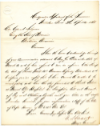
Civil War-Date Letter Signed – early in the Vicksburg Campaign
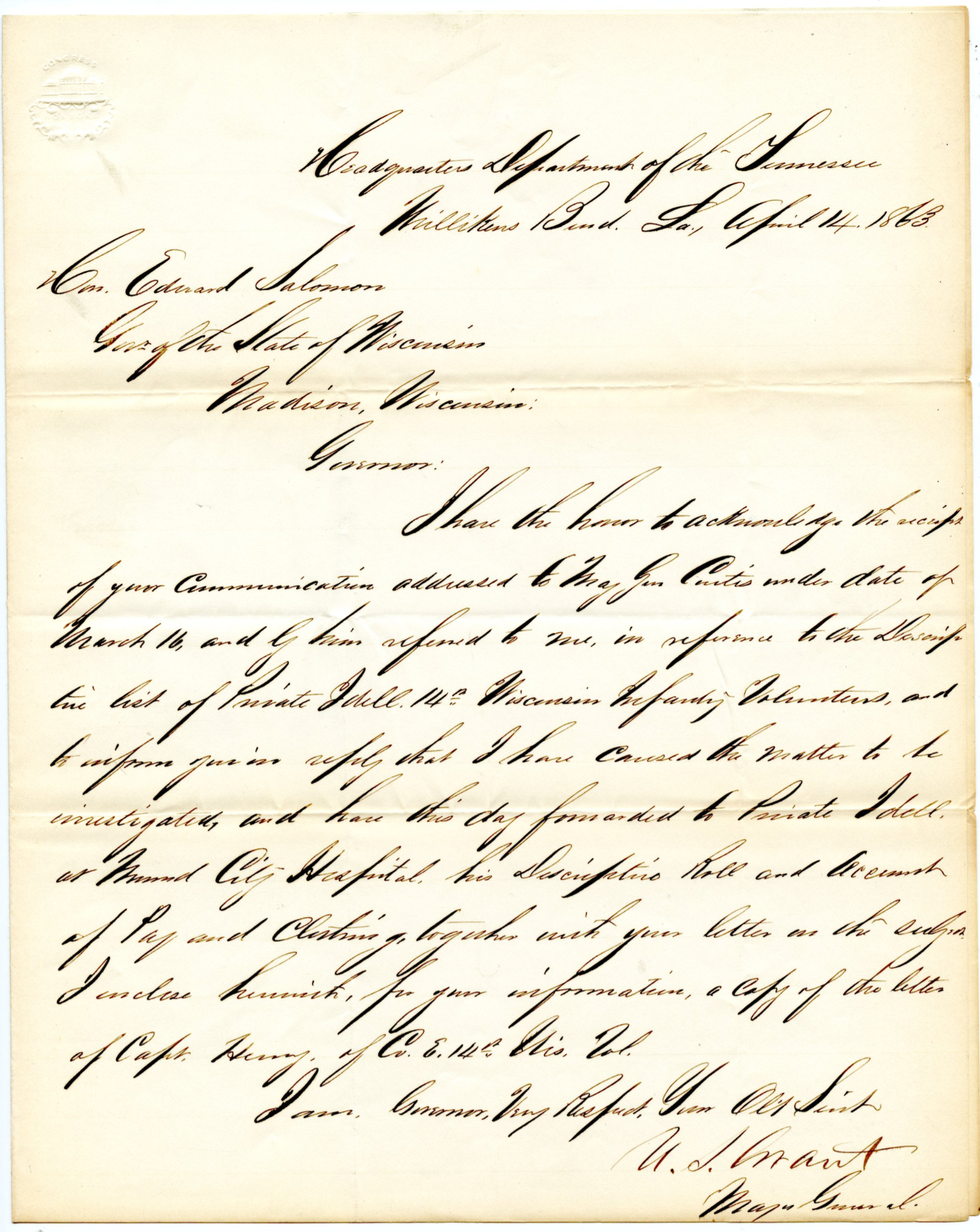
Letter Signed, 7 ¾” x 9 ¾”. From encampment across the Mississippi River in Louisiana during the campaign to take the Confederate stronghold of Vicksburg, Mississippi, General Grant acknowledges communication from Wisconsin Governor Edward P. Salomon regarding 14th Wisconsin Infantry Private Isaiah R. Idell. Private Idell received a disability discharge on September 12, 1863.
“Headquarters Department of the Tennessee, Millikens Bend, L[ouisian]a, April 14, 1863. Hon[orable] Edward Salomon, Gov[erno]r of Wisconsin, Madison, Wisconsin. Governor: I have the honor to acknowledge the receipt of your Communication addressed to Maj[or] Gen[eral] [Samuel] Curtis under date of March 16, and by him referred to me, in reference to the Descriptive list of Private Idell, 14th Wisconsin Infantry Volunteers, and to inform you in reply that I have caused the matter to be investigated, and have this day forwarded to Private Idell, at Mound City Hospital, his Descriptive Roll and Account of Pay and Clothing, together with your letter on the subject. I enclose herewith, for your information, a copy of the letter of Capt[ain] Henry, of Co[mpany] E, 14th Wis[consin] Vol[unteers]. I am, Governor, Very Respect[fully] Your Ob[edien]t Serv[an]t, U.S. Grant, Major General.”
Excellent, with light, even toning and the expected vertical and horizontal folds.
GRANT, ULYSSES S. (1822-85) Eighteenth U.S. President – 1869-77; Union Lieutenant General, during the American Civil War; Commanding General of the Army of the United States – 1864-69
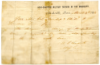
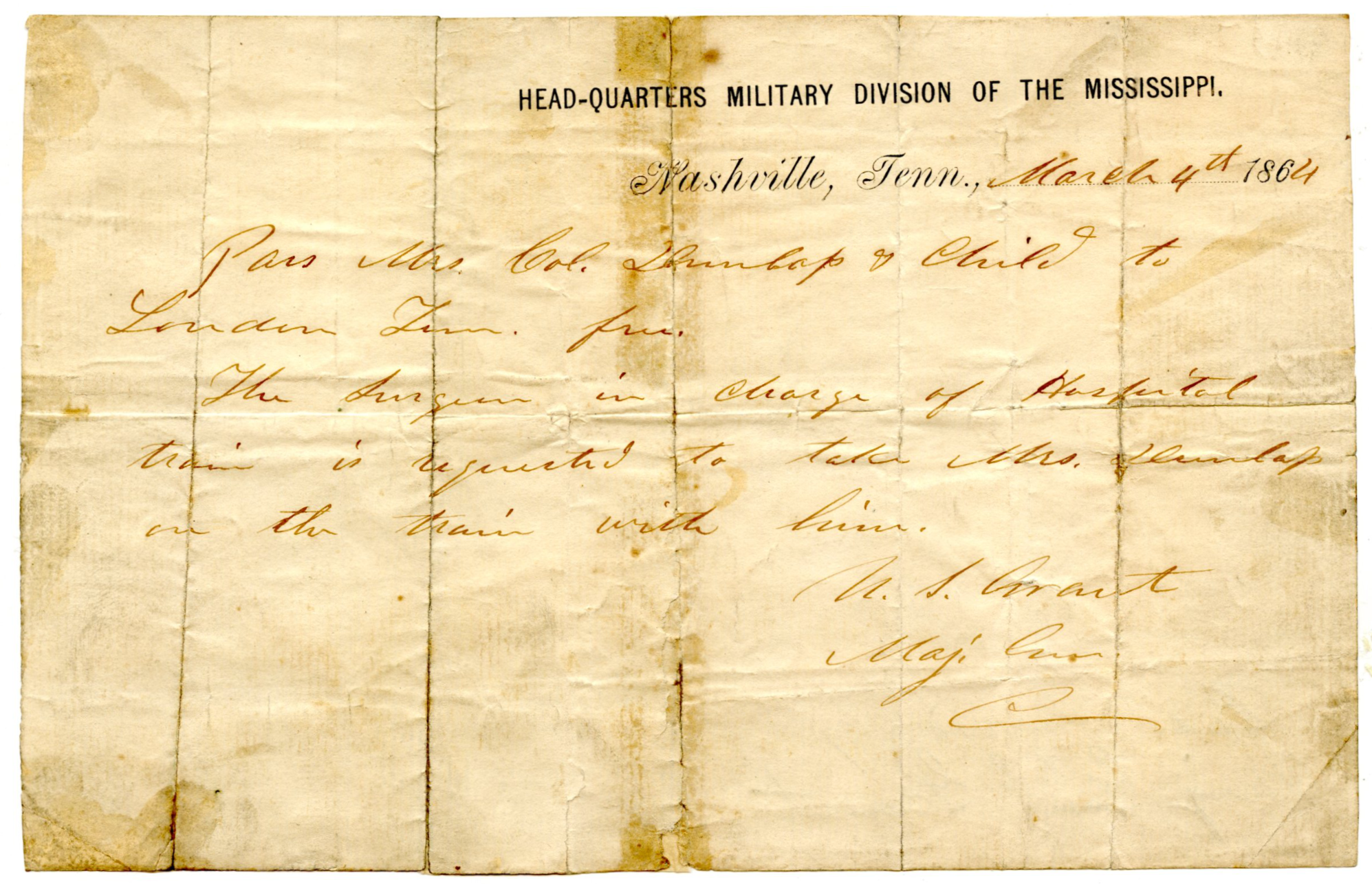
Civil War-Date Autograph Document Signed – a handwritten Pass
Autograph Document Signed, 5” x 7 ¾”, a handwritten pass on an official form, imprinted “Head-Quarters Military Division of the Mississippi, Nashville, Tenn[essee],” surely one of the last orders that Grant issued before promotion. He traveled to the East just days later, arriving in Washington, D.C. on March 8 and was famously and ceremoniously appointed lieutenant general and commander-in-chief of the U.S. Army by President Lincoln on March 9, 1864.
“March 4, 1864. Pass Mrs. Col[onel] Dunlap & Child to Loudon Tenn[essee] free. The Surgeon in charge of Hospital train is requested to take Mrs. Dunlap on the train with him. U.S. Grant, Maj[or] Gen[eral].”
Toning and wear throughout; old repairs on the reverse to minor paper loss and separation along several folds, with associated tape staining.
GRANT, ULYSSES S. (1822-85) Eighteenth U.S. President – 1869-77; Union Lieutenant General, during the American Civil War; Commanding General of the Army of the United States – 1864-69
-100.png)
-100.png)
Civil War-Date Autograph Letter Signed – Endorsed by Five Union Generals before the Battles of Iuka & Corinth in Confederate Mississippi
GRANT, ULYSSES S. (1822-85) Eighteenth U.S. President – 1869-77; Union Lieutenant General, during the American Civil War; Commanding General of the Army of the United States – 1864-69
ROSECRANS, WILLIAM STARKE (1819-98) Union Major General; U.S. Representative – California – 1881-85
TOWNSEND, EDWARD DAVIS (1817-93) Union Brigadier General; Adjutant General of the U.S. Army – 1869-80; Veteran of the Second Seminole War
HALLECK, HENRY WAGER (1815-72) Union Major General; Commander in Chief of the U.S. Army – 1862-64
HAMILTON, CHARLES SMITH (1822-91) Union Major General; Veteran of the Mexican & Comanche Wars
WATSON, PETER H. (?-?) Assistant Secretary of War, 1862 – Appointed by President Lincoln
Document Signed, 7 ¾” x 9 ¾”, endorsements on the reverse of a handwritten letter from Brigadier General Charles Smith Hamilton, requesting leave for twenty-five days. Army General-in-Chief Henry W. Halleck concludes by denying the request. The Battle of Iuka was fought on September 19, 1862, followed by the Battle of Corinth on October 3-4, both being regarded as Union victories.
“July 16, [18]62 C.S. Hamilton, Brig[adier] Gen[eral]. Applies for leave of absence.”
“Head Quarters, Dep[artmen]t of W[est] T[ennessee]. Corinth, July 19th 1862. Approved and respectfully forwarded to Gen[eral] H[ea]d Q[uarte]rs. U.S. Grant, Maj[or] Gen[eral].”
“Respectfully submitted to the Secretary of War. E.D. Townsend, Ass[istan]t Adj[utan]t Gen[era]l.”
“Referred to the General in Chief. By order of the Secretary of War. P.H. Watson, Ass[istant] Sec[retary] of War. Aug[ust] 20/[18]62.”
“Respectfully forwarded W.S. Rosecrans, Brig[adier] Gen[era]l U.S.A Com[man]d[in]g.”
“Not approved. Aug[ust] 22nd 1862. H.W. Halleck, Gen[era]l in Ch[ie]f.”
General Hamilton’s letter, in full, directed to “Brig[adier] Gen[eral] L[orenzo] Thomas, Adj[utan]t Gen[eral] U.S. Army, Washington, D.C.”
Camp near Corinth Miss[issippi]
July 16 – [18]62
Sir
I respectfully ask for leave of absence from my command for twenty five days.
An absence of over one year from my business, together with some recent complications in my private & personal affairs, renders it of vital importance to myself and family that I should give them my personal attention. Very respectfully, Your Ob[edien]t S[er]v[an]t, C.S. Hamilton, Brig[adier] Gen[eral] Vol[unteer]s.”
Tipped to slightly larger backing; lightly and evenly toned, with the expected folds and minor staining.
GRIERSON, BENJAMIN HENRY (1826-1811) Union Brigadier General; Colonel of the 6th Illinois Cavalry; Organized & Lead “Grierson’s Raid” during the Vicksburg Campaign; Commander of the U.S. 10th Cavalry of Buffalo Soldiers – 1866-90
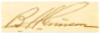
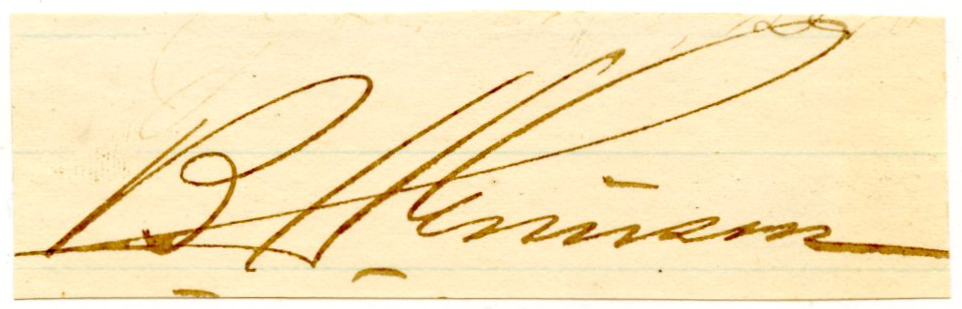
Signature, “B.H. Grierson,” on a 1” x 3” slip of paper, removed from a larger document or letter.
Lightly and evenly toned; somewhat closely clipped; excellent otherwise.
GRIFFITH, RICHARD (1818-62) Confederate Brigadier General – Mississippi; Mortally wounded in the Battle of Savage’s Station – June 29, 1862
-100.png)
-100.png)
-100.png)
-100.png)
-100.png)
Civil War-Date Autograph Letter Signed
“While the enemy threatens our front, and there remains a reasonable prospect or hope for him to advance, I will not leave my post except to meet him."
Autograph Letter Signed, 8 ¼” x 10 ½”, four pages on a folded letter-sheet, with exceptional content. Writing to his wife from winter encampment in the northern Virginia, Griffith details the dire situation of matters within the Confederate Army, shares emotional reflections on family and friends, and mentions several slaves by name.
“H[ea]d Q[uarte]rs 1st Corps Army Potomac, Leesburg, V[irgini]a, Jan[uar]y 21st 1862.
My darling wife,
My last letter to you had scarcely been mailed, when much to my delight, yours of 10th inst[ant] was placed in my hands, acknowledging the receipt of the $10.00 for little Georgy’s new year’s gift. Happy indeed was I to learn that all at home were well once more, and sincerely do I hope you may thus continue – and that health, happiness and prosperity may constantly attend you until we meet again. But when that may be I am unable to say at present. While the enemy threatens our front, and there remains a reasonable prospect or hope for him to advance, I will not leave my post except to meet him. For the past week the weather has been moderate and wet, & the ground in consequence becoming quite soft. Should similar weather continue much longer, the roads will become impassable for Artillery and heavy wagon trains, and render active field operations for troops utterly impracticable. Then I may seize upon the auspicious moment and run home, if to remain there only a few days. After much beseeching I have yielded to the wishes of my Adj[utant] Gen[era]l and consented to recommend him for a Furlough of 30 days. During his absence I can’t think of leaving, as much confusion would ensue in the official business of my department – having no other competent to supply his place. Gen[era]l Hill with assistance of Col[onel] Barksdale could readily fill my post, but my aid is not qualified to step into the shoes of my Adjutant. To undertake the qualifying another is just what I don’t feel disposed to do just now. The preparing od one was a huge task, and required several months training, and to attempt to teach another, who is not a very apt scholar, would be a herculean labor, and too much for one year’s campaign. When
[Page 2]
Capt[ain] Inge returns from his Furlough, I may then be able to leave, which will be most likely towards the latter part of February, providing the opposing armies continue as they now are. Should I not get the privilege of a short leave, you will be informed of it, and there I shall certainly insist upon a visit from you. Ere this I should have persuaded you to visit Leesburg, but I knew full well the troubles and difficulties such a trip at this season of the year – encumbered with children and baggage, over broken & interrupted rail roads. It would be hazardous in the extreme, unless accompanied by someone that could attend to all your wants & wishes to render you comfortable. Such trips had better be postponed to a more favorable season. You may rest assured I will come home on a visit if I can possibly leave my post in security. This however I intend keeping to myself.
As yet, dear wife, those wished for reinforcements have not been furnished, and I much fear they will be looked for in vain. Gen[era]l Beauregard cannot spare them without weakening his lines. He has sent us some ordnance which is of material importance, and we have the promise of some more. But we need an increase of infantry, as well as of Cavalry and Artillery. Our ranks are being gradually thinned, and no recruits coming to supply the vacancies. Spring may find our troops going home – their present term of enlistment having expired – and without re-enlistment of new troops, the field must be abandoned to the enemy, and Virginia wil be lost to us, and with the loss of Virginia all is gone and the ‘rebellion crushed.’ The prospect to me just now seems gloomy indeed, but I look for a bright and cheerful dawn. The women of our Country will be its hope and salvation. They must not permit the men to remain at home while we have an invading and heartless foe on our borders. Let them point the finger od scorn at every able bodied man who refuses or fails to meet his country’s call. Duty demands his service and he is a bare recreant who declines to respond favorably.
[Page 3]
Glad to learn Dr. Buck has returned home, for I shall feel much better satisfied with his Medical attendance in our family; at same time intending no disparagement to the other Doctors of Jackson. By the papers I see that our Governor has recalled the 60 days militia or Supernumeraries. I suppose they will be turned into a Home Guard again – filling a place that could be much better occupied by one heroic and patriotic woman – the support of the army – God bless them – following the war worn soldiers with their tears, their blessing, and their prayers – encouraging and cheering him in his manly duty. Excuse me, dear wife, for writing so much on these matters. My heart is in it.
I thank you for re-fitting the orchard – it was much needed. It seems to me that Tom is sufficiently intelligent to cut out the dead limbs and twigs, and shorten in the too much extended branches. Perhaps he is the best chance under the circumstances – with Jim Brown or Jim Gardener to assist. Mr. Allen may have returned by this time, and may be profitably employed again at home. But I would much rather see him in the ranks as a soldier. By the way, in riding along the brigade line I saw Mr. Tripp – he has not called to see me. I also saw Mr. Pat O’conner – my old gardener – in the ranks, and many others I might name whom you might have known – old & young. Do you know one Ja[me]s D. Green, son of Thomas K. Green? He is in the ranks here and has applied to me for some position that would relieve him. If it is the one I think, I don’t like the stock. Such applications are very numerous, pressing, and very annoying often. The old linen baby coat was understood by me at first sight, & my remark was simply intended to plague you. It has been very useful. It is to be regretted that I did not write you sooner in regard to my account with Shaw & Doherty. The amount of the bill seems very large, but it may be all correct, except as to the extravagant prices. When I return will look into it more carefully. It may be well enough however that it is settled. Would prefer not to be in debt any where.
[Page 4]
The approach of the Yankees to Jackson from Ship Island need not be apprehended. The route is not a practicable one. But I am glad to hear you say they would not find you there to receive them. In that event the valiant-Home Guard will be called into requisition, and can render themselves useful, and no doubt would. Yankee threats amount to but little. For the last three months or more they have been threatening to annihilate our army on the Potomac, but they have scarcely moved from their intrenchments & dare not. They were to move forward on the 15th inst[ant], but postponed it to the 25th, and after that I presume it will be prolonged indefinitely. We wish they would come – are prepared to give them a warm reception. Your arrangements for supply of meat &c. for the year is a most excellent one, and meets my full approbation. Pay Pa the full market price for pork as his proposition is exceedingly generous. The meat you have, and arranged for, with plenty of Molasses and cornmeal will amply feed the negroes. And then the potatoes.
How happy it makes me, dear wife, to know that I am loved and thought of by my children as well as by yourself. In this I am favored and blessed as in other relations of life. Tell Whitfield not to be impatient, that his Father will write go him again soon, as well as to Jefferson. To my dear Lucy I must also write something, whether she can read it or not. To-morrow or next day, I shall look for another from you. I have written much in this sheet, and said but little – what you don’t wish to read, consider as blank. And save yourself the trouble, as I do frequently with these in which I feel no interest from seeing the name subscribed. I am indebted to a Mr. J.D. Weil for sending me the Mississippian. Should you meet him my thanks. It is late at night and snowing – ground covered again. Remember me kindly to all, and kiss the babies. My military family all well. Have not written half what I wanted to say. May God bless you all and shield you from harm and danger is the fervent prayer of Your affectionate husband, R. Griffith.”
[Postscript, penned upside-down in the upper margin of Page 1]
"The enclosed dollar is for any negro you may see proper to give it – unless such has already received one. I will send Whitty one to give away, and also Lucy. Kiss Lucy often for me."
Accompanied by the 3 ½” x 6” transmittal envelope, addressed by Griffith to his wife, “Mrs. Gen[era]l R. Griffith, Care Col[onel] J.D. Stewart, Jackson, Mississippi,” with a Leesburg, Virginia postmark and two five-cent Confederate postage stamps affixed at upper left.
The letter is in excellent condition and highly legible, with light toning and the expected folds; there is heavier wear and soiling, a few small tears, at the edges of the transmittal envelope.
GROESBECK, JOHN BROWN (1820-79) Union Colonel – 39th Ohio Infantry; Led a brigade at New Madrid & Island No. 10
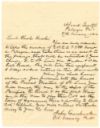
Civil War-Date Autograph Letter Signed – from the site of the “Palmyra Massacre”
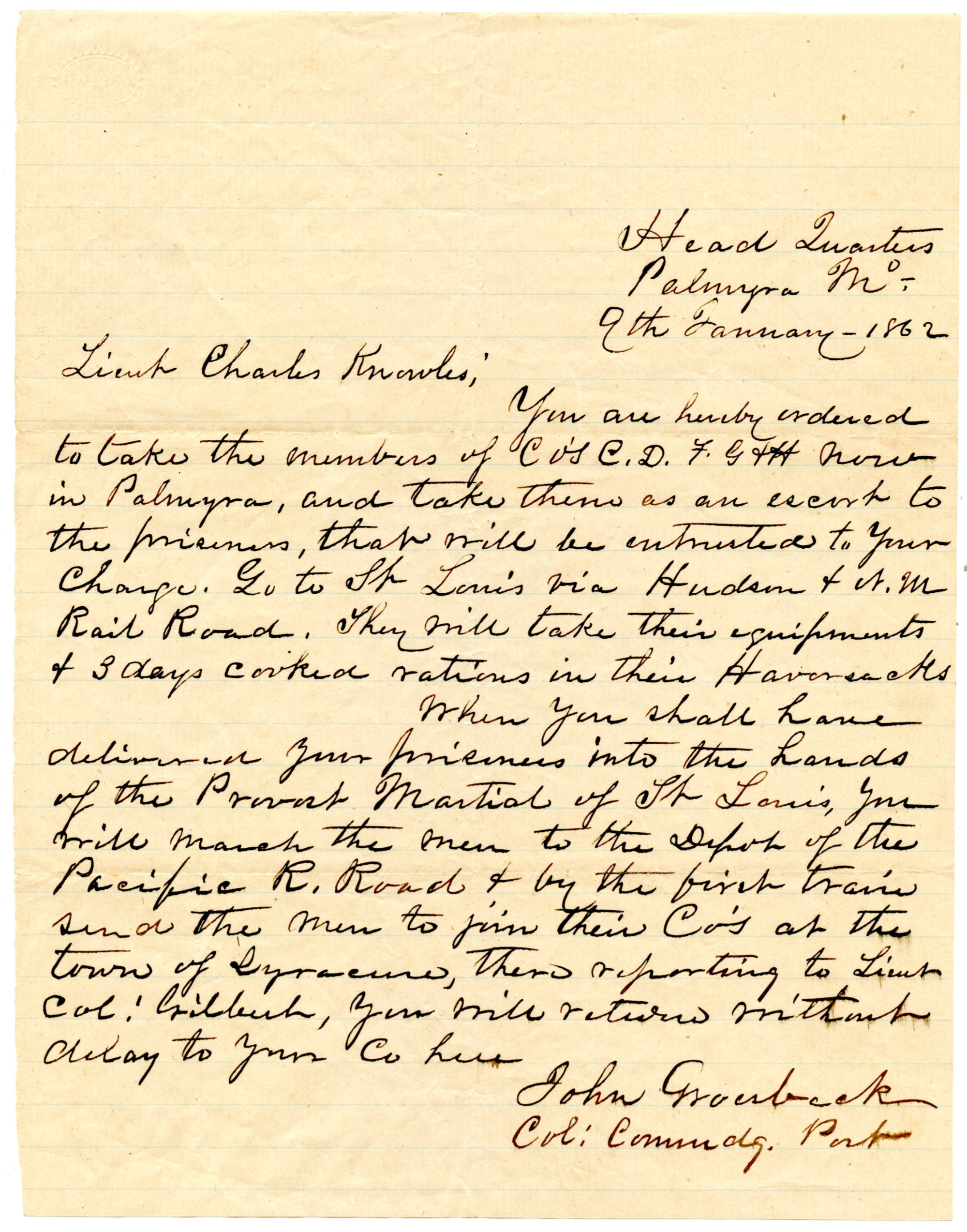
Autograph Letter Signed, 7 ¼” x 9 ¼”, from the northeastern Missouri post most dubiously remembered for the Palmyra Massacre of later in the year, concerning the conveyance of prisoners to the provost marshal in St. Louis.
"Head Quarters, Palmyra, M[iss]o[uri], 9th January – 1862.
Lieut[enant] Charles Knowles;
You are hereby ordered to take the members of Co[mpany]s C.D.F.G. & H. now in Palmyra, and take them as an escort to the prisoners, that will be entrusted to Your Charge. Go to St. Louis via Hudson & N.M. Rail Road. They will take their equipments & 3 days cooked rations in their Haversacks.
When You shall have delivered your prisoners into the hands of the Provost Martial [sic] of St. Louis, You will march the men to the Depot of the Pacific R[ail] Road & by the first train send the men to join their Co[mpany]s at the town of Syracuse, there reporting to Lieut[enant] Col[onel] Gildbert, You will return without delay to your Co[mpany] here.
John Groesbeck, Col[onel] Comm[an]d[in]g Post.”
Lightly and evenly toned, with the expected folds.
HAMMOND, WILLIAM ALEXANDER (1828-1900) Union Brigadier General; Surgeon General of the U.S. Army – 1862-64; Founder of the Army Medical Museum; Co-founder of the American Neurological Association
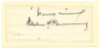
Appointed U.S. Surgeon General on April 25, 1862, Hammond radically reorganized the war-time Medical Department. He was court-martialed and dismissed from the service in 1864 after a political struggle with Secretary of War Stanton; the charges were reviewed in 1879 and Hammond was exonerated, restored to rank, and placed on the retired list.
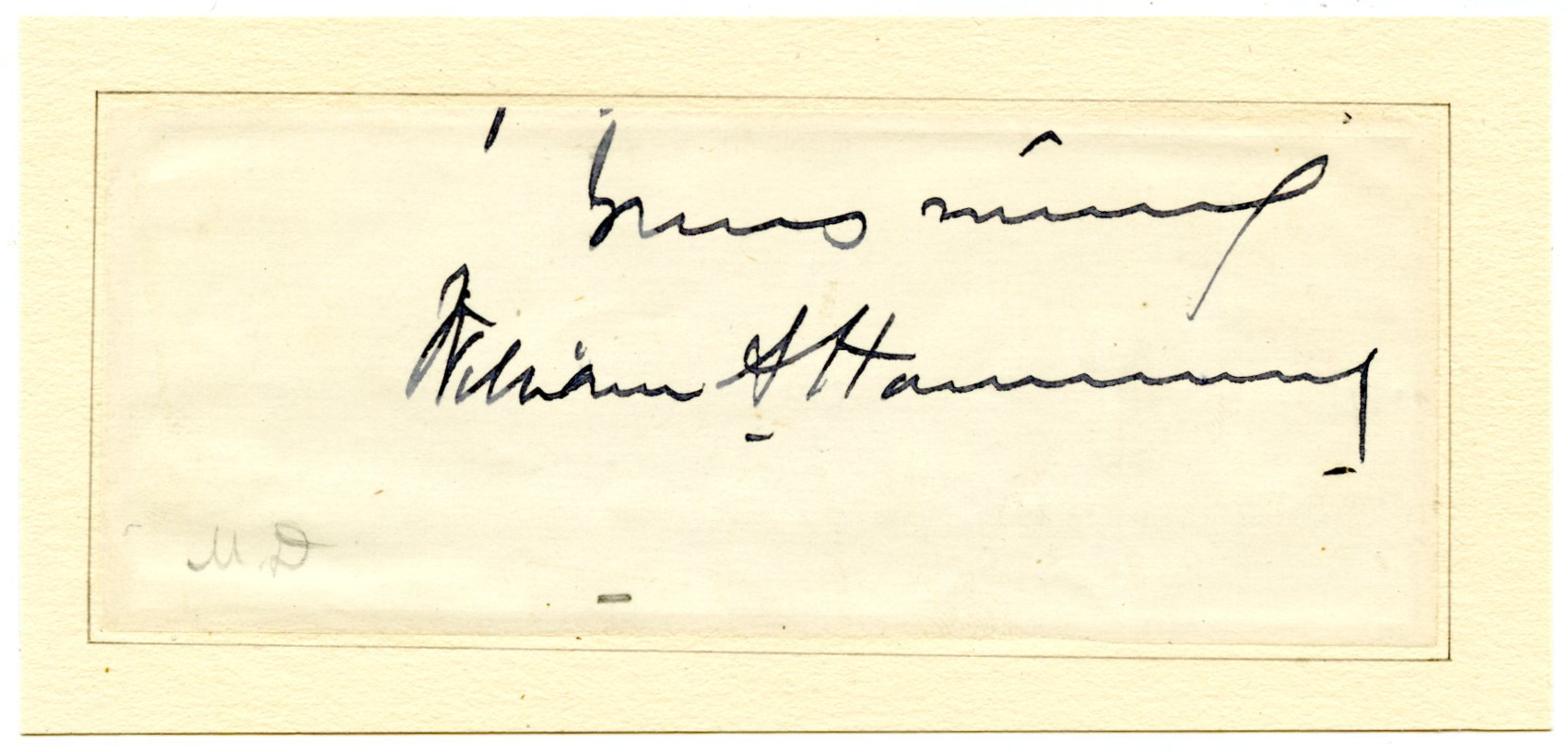
Signature, with closing, “Yours sincerely, William A. Hammond,” on a 1 ¾” x 4 ¾” slip of paper, removed from a letter; tipped to slightly larger backing.
Lightly and evenly toned, with a collector’s pencil notation in the lower left corner.
HARRISON, BENJAMIN (1833-1901) Twenty-Third U.S. President - 1889-93; Union Brevet Brigadier General, during the American Civil War; Colonel of the 70th Indiana Infantry; U.S. Senator – Indiana – 1881-87
-100.png)
-100.png)
Signature, as U.S. Senator, “Benj. Harrison, Ind[ian]a,” on a 5 ½” x 8 ¼” album page, above the signature of Daniel W. Voorhees, Harrison’s Indiana colleague in the U.S. Senate; the large signature of U.S. Senator John A. Logan, Union general from Illinois during the American Civil War, is on the reverse.
Excellent, with light, even toning and a few superficial stains and light surface creases.


-1999.png)
-1999.png)
-1999.png)
-902.png)
-1995.png)
-1999.png)
-1999.png)
-1999.png)
-1999.png)
-1783.png)
-1999.png)
-1999.png)